Most drivers heading to Greece try to do the whole run in one push exactly once. Between the Danube bridge, the border at Makaza or Kulata and the final stretch on Egnatia, the day stretches toward twelve or thirteen hours — and the hardest section always lands when you are least sharp.
The good news is that Bulgaria is full of towns where an overnight stop is genuinely pleasant rather than merely tolerable. Not a roadside motel, but places where you eat well, sleep properly and leave the next morning with half the journey already behind you. What follows is organised by town, in the order you meet them.
Before anything else: if your route is not fixed yet, read Bucharest to Thessaloniki through Bulgaria first — the right stopover depends directly on whether you go through the Rhodopes or via Sofia.
The rule: stop after three to five hours, not after nine
A good stopover is not "halfway". It is at the end of the first comfortable driving shift. Leave Bucharest at 17:00, clear the bridge and drive two more hours, and you are around Veliko Tarnovo by 21:00 or 22:00. Leave at 08:00 on a Saturday and you reach Plovdiv by lunchtime — too early to check in, too late to push into Greece without driving mountain bends in the dark.
Which is why the choice of town depends far more on departure time than on distance.
Ruse: the stop for late departures
Ruse sits a few kilometres past the Giurgiu–Ruse bridge and is the only sensible option if you leave Bucharest after 20:00 or hit a serious queue at the toll.
It is a systematically underrated city, seen by most travellers only through a windscreen. The centre has a generous main square, nineteenth-century neo-baroque façades and a pedestrian boulevard where the terraces run late. For a transit night it is close to perfect: easy parking, short distances, quick breakfast the next morning.
Best for: evening departures, families with small children, solo drivers. The trade-off: you have barely dented the journey, so the next morning needs an early start.
Veliko Tarnovo: the most beautiful stop on the route
If we could recommend only one, it would be this. Veliko Tarnovo is roughly two hours past Ruse — long enough to feel like progress, short enough to arrive at a civilised hour.
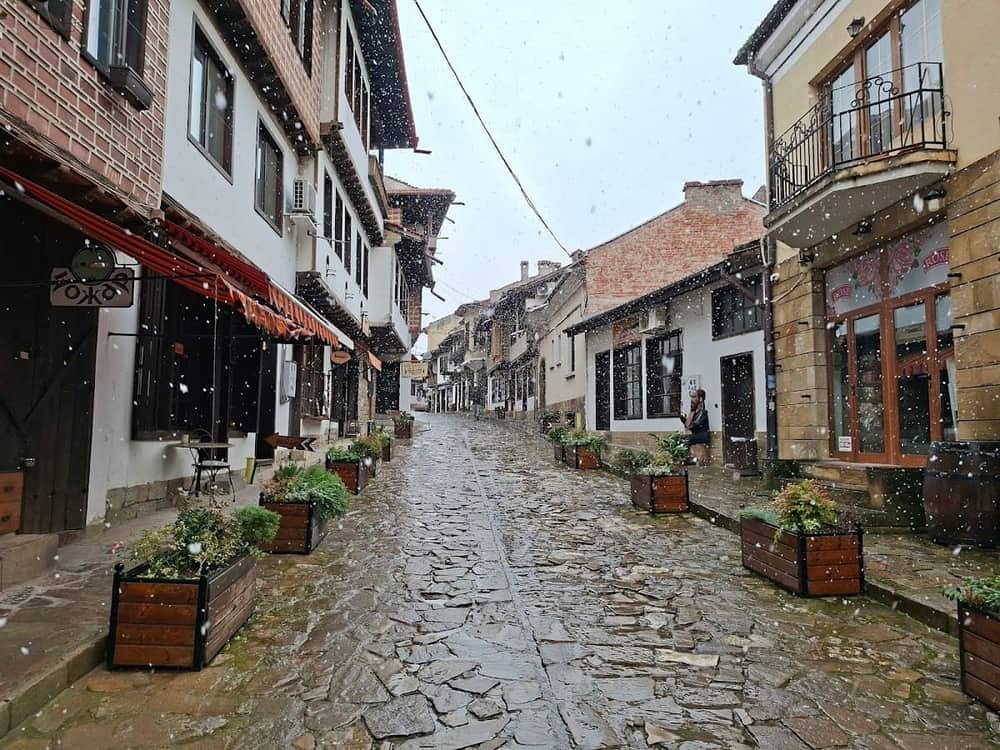
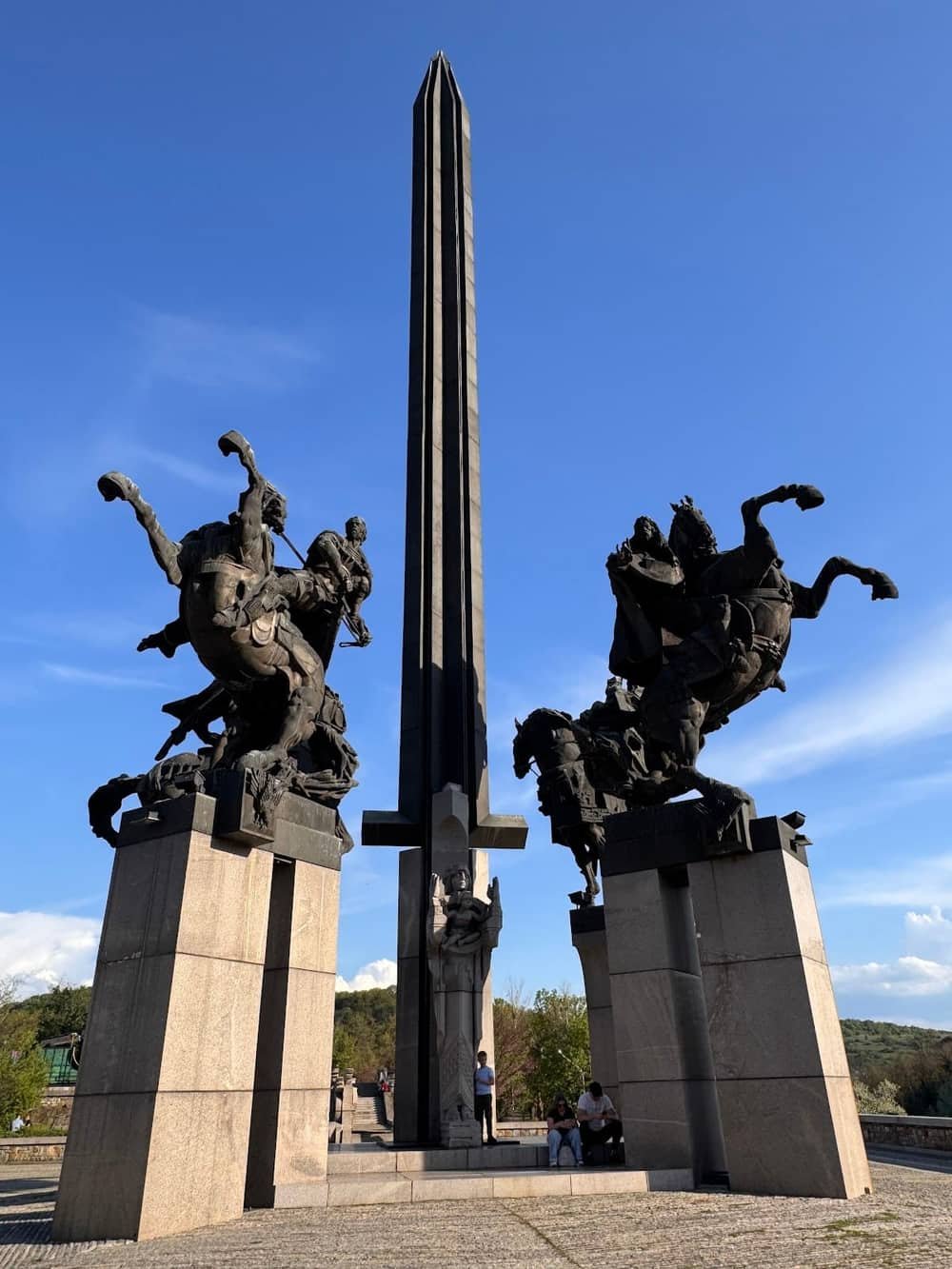
The town is stacked on the slopes of a bend in the Yantra river, houses piled above one another, the Tsarevets fortress floodlit overhead. This is not a technical stop; it is a reason to leave a day earlier. Samovodska Charshia, the old craft street, still houses working ateliers, and the old-town restaurants have terraces looking straight into the gorge.
Best for: couples, and anyone who wants the drive to be part of the holiday rather than a toll paid on it. Watch out: the old streets are narrow and steep. Book somewhere with its own parking or you will lose twenty minutes circling.
Kazanlak and Stara Zagora: the pragmatic stop
Not spectacular, but positioned exactly right if you are taking the central route toward Makaza. Stara Zagora is a substantial city with business hotels that price well at weekends; Kazanlak, in the Rose Valley, is the quieter alternative.
The advantage here is purely logistical: from this point you have a single driving shift left to the Greek border and you are on a beach by early afternoon.
Plovdiv: the stop that turns into a city break
Plovdiv is the best compromise between "on the way" and "worth seeing in its own right". Leave Bucharest in the morning, accept an afternoon of driving, and you arrive at a reasonable hour with only three or four hours left to Greece.
Kapana, the creative quarter, has changed beyond recognition in recent years — wine bars, specialty coffee, small galleries. The Roman theatre is a ten-minute walk away, and the old town, with its merchant houses from the Bulgarian Revival, fills one long evening and a morning.
Plenty of drivers who arrive saying "just one night" end up staying two. If you have any flexibility, build the evening in deliberately. It is a better evening than an extra one at the resort.
Best for: almost everyone, especially on the Makaza route.
The Sofia area: for the Struma route
If you have chosen the Sofia–Kulata variant, the natural stop is the capital or just south of it. Sofia has the widest accommodation supply in the country at every price level, and it is the last point on the route where you can find anything you might need — a garage, a late pharmacy, shops open past nine.
The calmer alternative is the Blagoevgrad area, already on the Struma motorway: less traffic, lower rates, an easier getaway in the morning.
How to choose a transit-night room
The criteria are completely different from holiday accommodation:
- Private, free parking. Non-negotiable with a fully loaded car.
- Late check-in. Confirm it in writing if you will arrive after 22:00.
- Early breakfast, or none. A breakfast starting at 08:00 is useless if you want to leave at 07:00.
- Fast access to the main road. A gorgeous hotel deep in a historic centre can cost you 25 minutes in morning traffic.
- A quiet room. Ask for the courtyard side, not the boulevard.
To compare rates and availability across the towns above, use the accommodation map at the foot of this page — it is the quickest way to see, at a glance, what is free along your route on the night you need it.
Three things to check the day before
- Your vignette. If you have not bought it, see Bulgaria by car: vignette and road charges.
- Pump prices. Where the big fill happens is decided with the fuel price tool.
- Weather along the route. Fog on the passes and summer storms rewrite your timings — check the forecast for the road, not only the destination.
If your journey continues to the north Aegean islands, the final leg is a port and a ferry; for Thassos our sister site carries a dedicated guide.
And if you end up staying in Bulgaria?
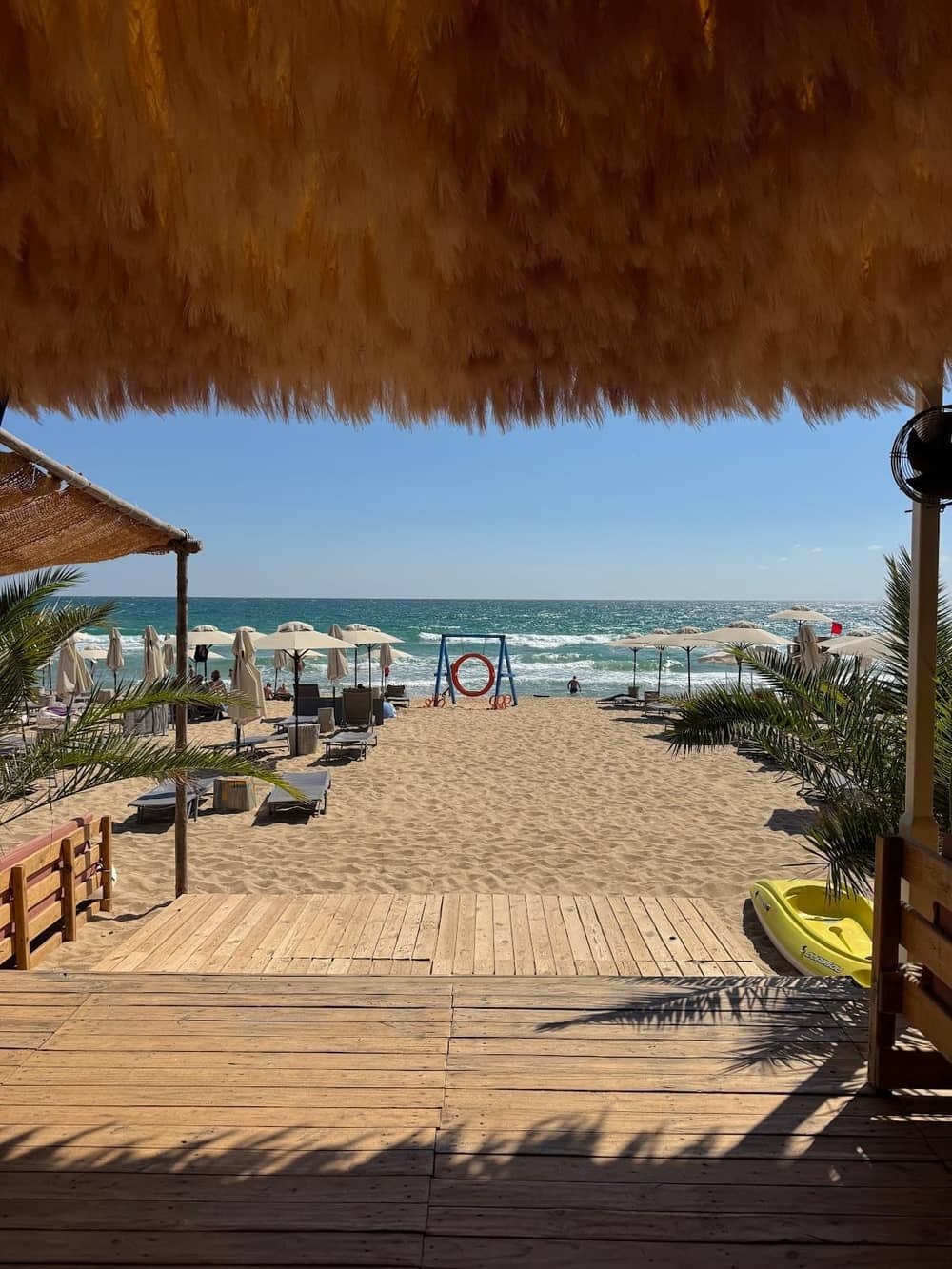
It happens more often than you would think. People stop a night in Veliko Tarnovo or Plovdiv, work out that the Bulgarian coast is three hours away rather than seven, and quietly rewrite the plan. If you are tempted, Burgas and Sunny Beach are one driving shift from here, with the full route described in Bucharest to the Bulgarian coast. For every access option, including car-free ones, see how to get to Bulgaria.
FAQ
Should I book ahead or find something on arrival? In July and August, book. Transit towns fill up on peak weekends precisely because everyone has the same idea. In May, June and September you will almost certainly find something on the spot, but a confirmation on your phone at 23:00 is still worth having.
What is the best stop if I leave on Friday after work? Ruse, almost always. You arrive in about ninety minutes from Bucharest, sleep normally and set off on Saturday morning rested with the full drive ahead. If you still have two hours in you, Veliko Tarnovo is the next step up.
Can I leave luggage in the car overnight? It is not a good idea anywhere, in any town. Choose accommodation with enclosed or supervised parking and take anything valuable inside. It is a trivial precaution that prevents a holiday ruined on day one.
How much does an overnight stop add to the total cost? A room in a Bulgarian transit town is typically well below the price of a resort night in Greece (approximate — it depends on season and town). In practice you are buying one cheap night in order not to drive exhausted. The maths is hard to argue with.