On a map, Bucharest to Thessaloniki looks like a single day behind the wheel. On the road, it is three countries, two currencies and at least four different kinds of charge — and almost everything that decides whether the day is calm or miserable happens in the middle section, in Bulgaria. That is where you choose your vignette, your motorway, your fuel stop and your border crossing into Greece.
This guide is written for the driver who leaves on a Friday evening or a Saturday morning and wants to reach the Aegean without unpleasant surprises. Tariffs, pump prices and queue times shift from season to season, so wherever numbers appear they are approximate and we point you to where the current figure lives.
The route in short: two options that genuinely differ
There are two realistic ways through Bulgaria, and choosing between them is more about temperament than distance.
- The central route, via the Makaza pass. Giurgiu–Ruse → Veliko Tarnovo → Stara Zagora → Haskovo → Kardzhali → Makaza → Komotini, then west on the Egnatia motorway to Thessaloniki. Shortest on paper, but it includes national road through the Rhodope mountains — switchbacks and a lower average speed.
- The western route, via Sofia and Kulata. Ruse → Veliko Tarnovo → Sofia → the Struma motorway → Kulata/Promachonas → Thessaloniki. More kilometres, far more motorway. The sensible pick with a loaded car, small children aboard, or a driver who does not want mountain bends after dark.
Total distance sits somewhere around 700–800 km depending on the variant (approximate). If you are still weighing driving against flying or the bus, we compare all of them in how to get to Bulgaria.
The Danube bridge: your first charge of the trip
Your first expense arrives before you leave Romania. Crossing the Danube on the Giurgiu–Ruse bridge is paid at the toll plaza, banded by vehicle category, card accepted. It is also the first place you can lose an hour: on peak July and August weekends the queue builds, and very early mornings are visibly calmer than the mid-morning window.
Current tariffs, opening logistics and timing advice live on our dedicated Giurgiu–Ruse bridge page, together with the Calafat–Vidin alternative if you are starting from western Romania.
One point that still catches people out: even after systematic checks at internal land borders were lifted, the bridge toll remains. It is an infrastructure charge, not a border fee. Border police can still run spot checks, so keep the vehicle registration and your ID within reach.
The Bulgarian e-vignette, done properly
The moment you clear the bridge you are on Bulgaria's charged road network. Cars under 3.5 tonnes use an electronic vignette — nothing goes on the windscreen; the system reads your plate. You can buy it online through the official platform, at fuel stations, or at kiosks near the border.
Three things worth internalising:
- Enter the registration number exactly. One wrong character and you have paid while the system still sees an untaxed vehicle.
- The vignette is sold by time, not distance. For a return trip within the same week, a longer validity often beats two short ones.
- Online activation is not always instant. Buy it with some margin before you actually join a charged road.
Categories, exempt sections and how to check validity are unpacked in Bulgaria by car: vignette and road charges. We deliberately avoid printing prices here — they change, and a stale number is worse than no number.
Fuel: where to actually fill up
The rule of thumb that regular drivers on this route confirm is simple: Bulgaria is usually cheaper at the pump than Greece, sometimes noticeably. It is not a law of physics — duties and exchange rates move — but the pattern is consistent enough to plan around:
- Leave Romania full or nearly full.
- Take one complete fill in Bulgaria, ideally on a motorway or in a large town, before the last 100 km to the Greek border.
- In Greece, buy only what you need.
Bulgarian stations take cards without drama, but in the small Rhodope villages it helps to carry some leva. Exchange booths at border crossings offer, almost without exception, a worse rate than an ATM.
For a current side-by-side of Romanian, Bulgarian and Greek prices, use our fuel price tool before you decide where the big fill happens.
Bulgarian motorways and what to expect
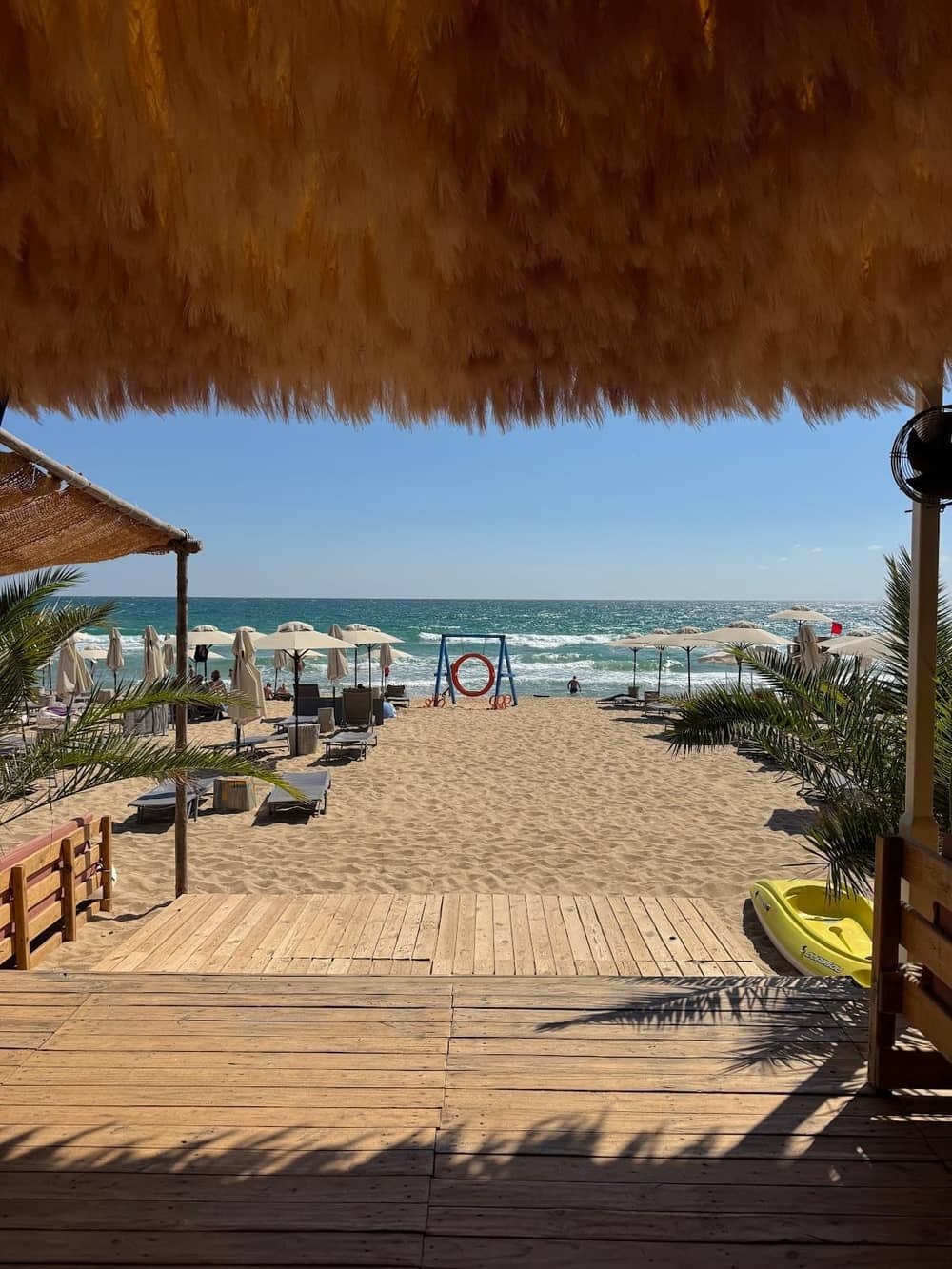
Bulgaria's motorway network is better than its reputation. Trakia (Sofia–Burgas) is the road that takes you toward Burgas and resorts like Sunny Beach, should you ever decide mid-trip that Greece can wait. Maritsa runs southeast; Struma drops south to Kulata.
Practical notes:
- There is almost always a section under construction. The Kresna gorge stretch on Struma spent years as a special-regime work zone. This changes and needs verification before departure.
- Speed enforcement is real and dense. Fixed cameras, mobile units and average-speed sections all operate. Fines follow the registered owner home.
- Rest areas vary wildly. The big ones with fuel and a restaurant are fine. The small laybys are not places to sleep.
If your route runs through southern Bulgaria and you can spare an hour, Plovdiv rewards far more than a fuel stop — the old town deserves a proper three hours.
Crossing into Greece: Makaza or Kulata
Makaza (Nymfaia) transformed access to northeastern Greece. It drops you near Komotini, roughly an hour from Kavala and close to the ports serving the north Aegean islands. If your final destination is Thassos, Makaza is the obvious choice. Check opening arrangements before you go — the pass has had works periods.
Kulata/Promachonas is the classic motorway crossing for Thessaloniki: higher capacity, constant freight traffic, predictable. In peak season it still queues, particularly on Sunday evenings heading north.
Both crossings sit between Schengen states, so systematic checks are gone — but random checks remain possible. Keep registration, licence and insurance to hand, plus written authorisation if the car is not in your name.
Greek road tolls
Greece works on a different logic to Bulgaria: no vignette, but toll plazas where you pay per segment travelled. Egnatia Odos, the motorway linking the northeast to Thessaloniki, has several. Cash or card, in euro.
We are not quoting sums, because they are revised periodically. The point to absorb is that on a long transit the cumulative Greek tolls can exceed what you paid for the Bulgarian vignette over the same period. Budget them as a separate line.
The pitfalls that cost drivers most
- A vignette bought too late, or with a typo in the plate. The most avoidable fine on the route.
- Driving the Rhodopes tired at night. The bends between Kardzhali and Makaza do not forgive sleep debt. If it is too much, stop — we have a separate guide to where to break the journey to Greece.
- Changing money at the border. Bad rate, real commission. Use an ATM.
- Ignoring the forecast. Fog on the Rhodope passes and summer storms on Trakia rewrite your travel time. Check the weather along the route, not just at the beach.
- Missing mandatory equipment. First aid kit, warning triangle, hi-vis vest, extinguisher — these are checked and fined.
- Departing at the same hour as everyone else. Saturday between 07:00 and 11:00 is when the entire country sets off.
How long it really takes
Without stops, a routing app will promise nine or ten hours. Add the border, a fuel stop, two meals and a queue at the bridge and you land closer to 12–13 hours door to door (approximate). That is precisely why many drivers split the trip overnight — and why those heading to the Bulgarian coast instead have a far easier day, as described in Bucharest to the Bulgarian coast.
If you are travelling with children or you are the only licensed driver, plan the overnight stop from the outset. A room costs less than a mistake made at three in the morning.
FAQ
Do I need a Bulgarian vignette if I am only transiting? Yes. The charge applies to the republican road network whether or not you stop in the country. Transit is not an exemption. A handful of local roads and town bypasses fall outside it, but you cannot build a long-distance route on those.
Can I pay Greek tolls by card? At most plazas on the main motorways, yes. Even so, keep some euro cash in the car: some lanes are automated and can be temperamental with foreign cards. Any amounts you see quoted online should be treated as approximate and confirmed on the spot.
Which Greek border is faster, Makaza or Kulata? It depends on where you are going and when. Makaza is shorter for Komotini, Kavala and the northeastern ferry ports; Kulata makes more sense for Thessaloniki and Halkidiki. In peak season both can queue, and waiting times are impossible to guarantee.
Is it worth doing the whole drive in one day? With two drivers swapping, yes. Alone at the wheel — especially with a fully loaded car — an overnight stop changes the quality of the entire holiday. The best towns for that stop, along with accommodation options, are covered separately.