
Varna is in no hurry to impress you, and that is precisely why it succeeds. It lacks the dramatic outline of a city built on a cliff, and the restored pomp of an imperial capital. What it has instead is rarer: the quiet coherence of a place that has lived with the sea for thousands of years and no longer feels the need to prove it. Greek trade, Roman baths, Byzantine merchants and nineteenth-century villas overlap here without showing off, and over all of it hangs the salt air of an urban beach where people drift down in the evening, in flip-flops, as if it were their own back garden.
For the visitor arriving from Romania, Varna is almost unfairly convenient. The border is crossed without stopping — Romania and Bulgaria are both in Schengen, so there is no longer any passport or ID check at the land frontier. And money is no longer a puzzle: Bulgaria has adopted the euro, even if the lev still circulates alongside it during the transition. You leave the Romanian coast, drive a few hours, and find yourself in a city that looks like one long summer, without having changed currency or reached for your documents.
Why Varna
Varna is Bulgaria's third city and the unofficial capital of the northern coast. Unlike the satellite resorts around it, it is a real city — with a university, an opera house, a commercial port and a population that does not vanish in October. That gives it a texture Sunny Beach or Golden Sands cannot match: cafes that open all year, bookshops, markets, a street life not built solely for tourists.
The density of history is striking, too. Within a few hundred metres of the centre you have open-air Roman baths, a landmark cathedral, a museum holding the oldest worked gold treasure on earth, and a promenade-garden that drops straight to the beach. Few cities this size offer so many layers in a single afternoon's stroll.
The heart of the city: the Sea Garden
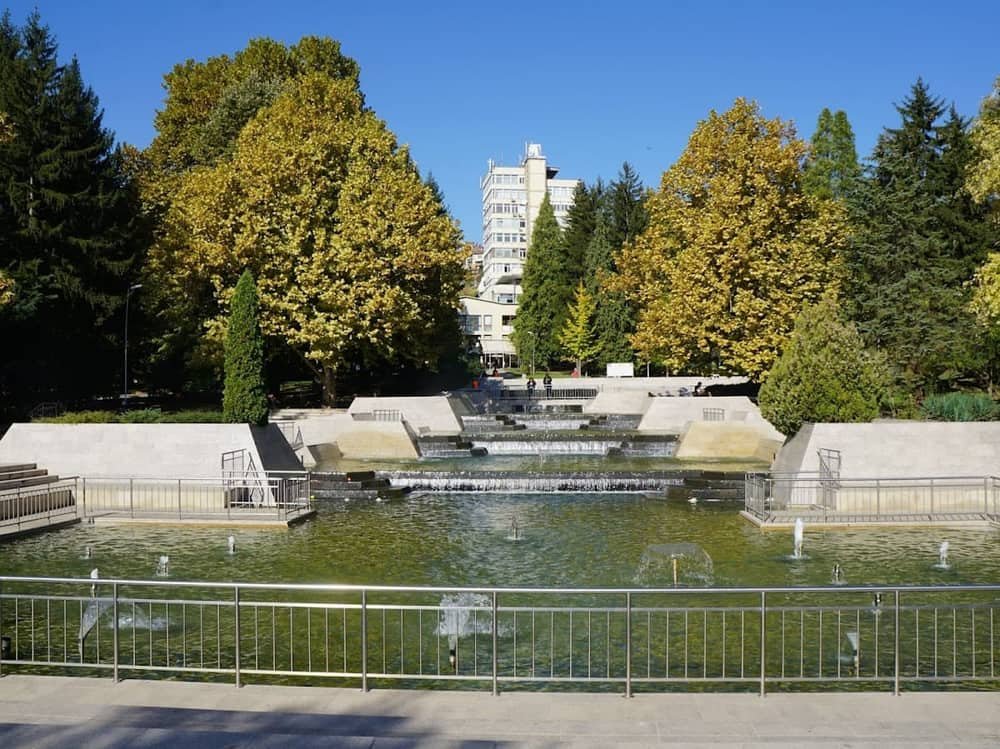
If Varna has a soul, it is the Sea Garden (Morska Gradina). A vast park stretched along the shore — one of the largest public gardens on the Black Sea coast — it works as the city's living room. Plane-shaded alleys, busts of writers and sailors, terraces, an aquarium, a planetarium, a dolphinarium, and stone balconies from which to watch the sea change colour towards dusk.
- Enter from the centre and let yourself drift north; the main alley is the liveliest, but the side branches hide quiet corners.
- Drop down to the central beach right below the garden — this is the city's urban beach, with sand, beach bars and a steady tide of locals.
- Towards evening the garden becomes the whole town's promenade. That is the moment for an ice cream and a sunset over the water.
The Roman Thermae
A few minutes from the port stand the Roman Thermae, the largest preserved Roman baths in Bulgaria and among the most extensive in south-eastern Europe. They date from the 2nd–3rd centuries AD, when the city was called Odessos and served as a trading hub of the Empire. The brick walls still rise impressively high; in places you can make out the arches, the under-floor heating channels (the hypocaust) and the ritual rooms of the bath — frigidarium, tepidarium, caldarium.
This is the kind of site that needs no flashy reconstruction: its scale speaks for itself. You pay a modest ticket (price indicative, check on site) and wander among the ruins at your own pace. For context, there are also traces of smaller, later baths nearby.
The Archaeological Museum and the world's oldest gold
Here is Varna's headline act and one of the most important museums in Bulgaria. The Regional Museum of Archaeology holds the Varna Necropolis, unearthed in the 1970s, and with it the oldest worked gold treasure known anywhere — pieces roughly 6,500 years old (the 5th millennium BC), from the Chalcolithic era.
This is more than a chronological curiosity. The Varna graves changed how we understand European prehistory: so much gold, concentrated in a handful of burials, is among the earliest evidence of social hierarchy and personal wealth in human history. The central case — with the diadems, bracelets and sceptres of a high-ranking figure — is reason enough to make the trip on its own.
- Allow at least an hour, more if prehistory fascinates you.
- The collection does not stop at gold: there are Thracian, Greek and Roman pieces and medieval icons.
- Opening hours and ticket prices are indicative — confirm them on the day of your visit.
The Cathedral of the Dormition
The city's visual landmark is the Cathedral of the Dormition of the Mother of God (known locally as the Uspenie Bogorodichno Cathedral), raised at the end of the nineteenth century after Bulgaria's Liberation. With its three gilded domes and massive bell tower, it dominates the central square and serves as a reference point for any walk through town.
The interior is worth a few minutes of quiet: a carved iconostasis, stained glass and frescoes that, while not ancient, have the warmth of a living church in daily use. In front of the cathedral spreads one of Varna's busiest squares, good for a coffee break with a view.
Beach, bars and nightlife
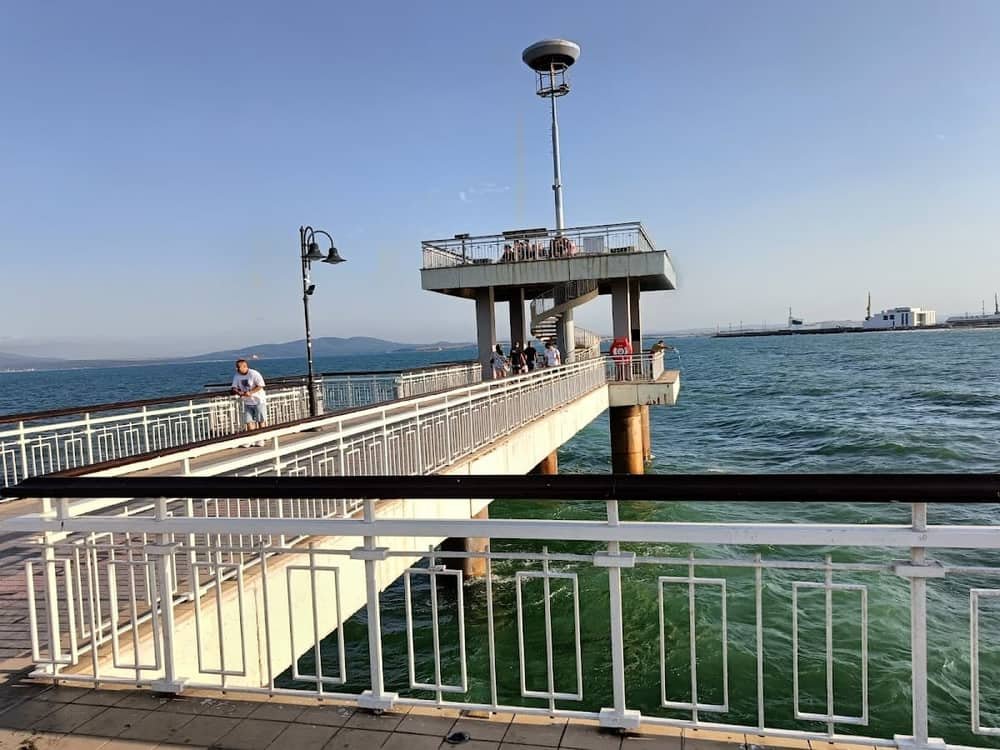
Varna has a double personality: museum by day, seaside by night. The central beach, below the Sea Garden, is the easiest — you step onto it straight from the city. To the north runs a string of beach clubs and terraces that, in high season, keep the music going late. It is not the industrial intensity of Golden Sands or Sunny Beach, but something more urban and more mixed: students, locals and tourists all together.
- For a quieter evening, choose the terraces in the Sea Garden or the old centre, around the pedestrian street.
- For a party, the beach bars to the north are the obvious call.
- Seafood is the coast's specialty — look for rapana (a sea snail turned local dish) and fresh grilled fish.
Varna in 2 days
Day 1 — the historic city. Start with the Archaeological Museum while your mind is fresh, for the Chalcolithic gold. Walk down to the Roman Thermae, cross to the Cathedral and pause in the central square. In the afternoon, lose yourself in the Sea Garden and end the day on the central beach with a sunset and a terrace.
Day 2 — coast and excursions. Give the morning to the beach, or to the aquarium and dolphinarium (excellent with children), then set out on a day trip north — Aladzha Monastery, Golden Sands or Balchik. Return at dusk for one last promenade.
Day trips
- Aladzha Monastery — a medieval monastic complex carved into the rock north of the city, beside a forest reserve. A hushed atmosphere, a sea view, and easy to combine with Golden Sands.
- Golden Sands — the largest resort in the north, about 18 km away. A wide beach with a nature park behind it, a good option for a classic seaside day.
- Balchik — a jewel of a town to the north, with the palace of Queen Marie of Romania and its terraced botanical garden descending to the sea. For Romanian visitors it carries a particular weight; it is one of the loveliest excursions in the region.
- Albena, closer to Balchik, makes a calmer beach alternative.
Getting there
- By car, coming from Romania, is the simplest route. The border is crossed without checks (Schengen). Remember two things: you must have an electronic vignette to drive on Bulgarian roads (buy it online or at petrol stations), and fuel costs around 2 euro a litre (petrol and diesel, an indicative figure).
- By air, Varna has its own airport with seasonal flights; check direct connections for the year you travel.
- By coach or train, there are links from the major cities, but the car remains the most flexible way to pair Varna with Balchik, Golden Sands or a run south to Nessebar and Burgas.
Where to stay
- In the centre / near the Sea Garden — ideal if you want to do everything on foot: museums, baths, beach, terraces. The best choice for a short city break.
- Along the seafront, towards the central beach — for those who want the sea at their doorstep and nightlife close by.
- Towards Golden Sands or Sveti Konstantin — if a resort beach is the priority, with Varna as a day-trip destination.
Whatever your style, Varna works best unhurried. It is a city that rewards walking, conversation on a terrace and the very Bulgarian habit of going down to the sea in the evening simply to watch the light change. Come for the gold and the baths; stay for the rhythm.
FAQ
What shouldn't I miss in Varna? The Regional Museum of Archaeology, which holds the Varna Necropolis and the oldest worked gold treasure on earth — pieces roughly 6,500 years old, from the Chalcolithic era. Alongside it, the Roman Thermae (the largest preserved in Bulgaria), the Cathedral of the Dormition and the Sea Garden, which drops straight to the beach.
How long do I need in Varna? The guide suggests two days: the first for the historic city (Archaeological Museum, Roman Thermae, Cathedral, Sea Garden and central beach), the second for the beach or the aquarium-dolphinarium plus a day trip north — Aladzha Monastery, Golden Sands or Balchik.
Which day trips are worth it from Varna? Aladzha Monastery (a medieval complex carved into the rock), Golden Sands (about 18 km away) and especially Balchik, with the palace of Queen Marie of Romania and its terraced botanical garden — one of the loveliest excursions in the region, carrying a particular weight for Romanian visitors.
How do I get to Varna from Romania? By car is simplest: the border is crossed without checks (Schengen). Remember you must have an electronic vignette for Bulgarian roads, and fuel costs around 2 euro per litre (indicative). Varna also has its own airport with seasonal flights.