Bulgaria has serious mountains, and they sit surprisingly close to the sea. The same travellers who spend their mornings on the sand at Sunny Beach, Albena or Golden Sands can be, four or five hours later, standing on ridgelines above 2,500 metres among glacial lakes and dwarf pine. This guide gathers the country's best hikes — from the most photographed to the most demanding — along with everything practical you need before setting off.
One detail makes the logistics dramatically easier: Romania and Bulgaria are both inside Schengen, so the land border has no passport or ID control — you cross as if moving between two counties. The currency is now the euro (the lev still circulates alongside it during the transition), and Bulgarian main roads require a mandatory electronic vignette. Fuel runs around 2 euro per litre (indicative, petrol and diesel alike).
The Seven Rila Lakes — the signature trail
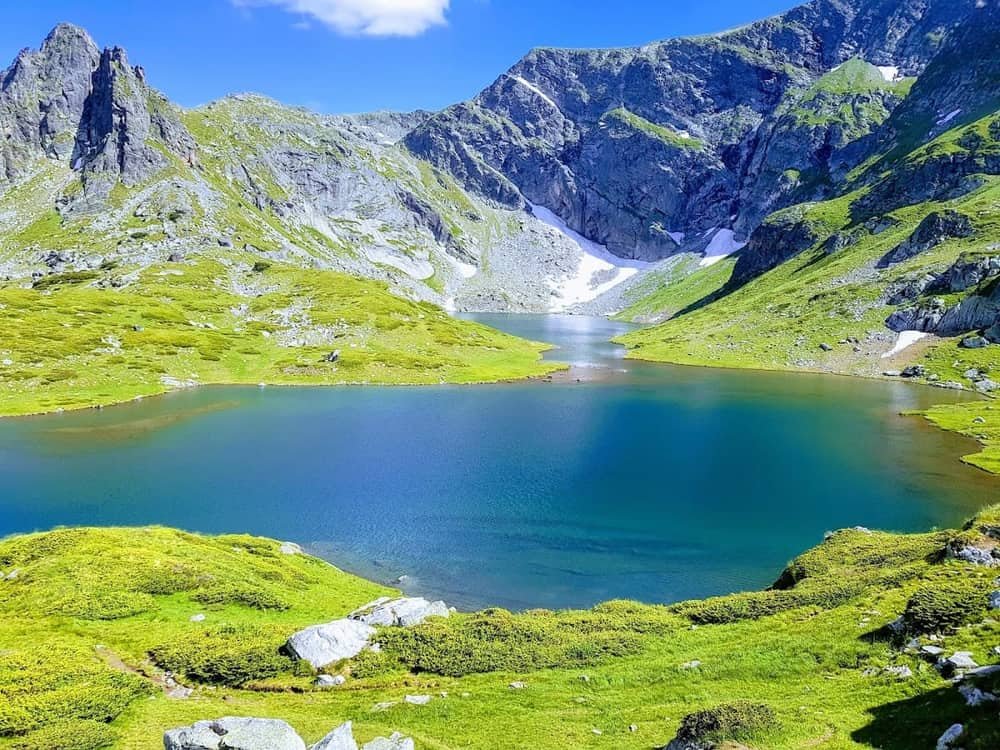
If you do only one hike in Bulgaria, make it this one. The Seven Rila Lakes (Sedemte rilski ezera) are a chain of glacial lakes set in steps between roughly 2,100 and 2,500 metres in the Rila massif. Each is named for its shape: the Tear (highest, with the clearest water), the Eye, the Kidney, the Twin, the Trefoil, the Fish and the Lower Lake.
The classic approach uses a chairlift that climbs from the Panichishte area to near the Rila Lakes hut, cutting out much of the grind. From there, the loop linking the viewpoints above the lakes takes, at an unhurried pace, about 4–6 hours (indicative), with a high point from which you can see all seven at once — Bulgaria's postcard image.
- Difficulty: moderate; wide, marked paths, but sustained climbing to the panoramic point.
- When: ideally July to September. Patches of snow can linger up high into June.
- Heads-up: this is the busiest trail in the country on summer weekends. Start early or come on a weekday.
Musala — the highest peak in the Balkans
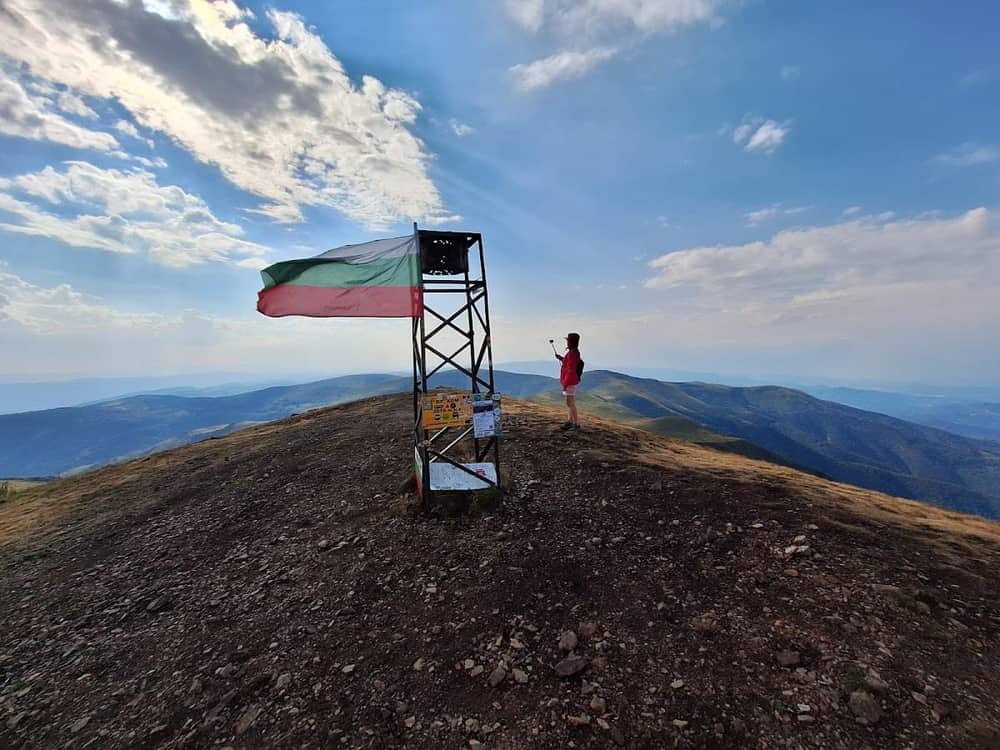
Musala (2,925 m) is not just Bulgaria's highest summit but the highest in the entire Balkan Peninsula — taller than anything in Greece, Serbia or Romania south of the Carpathians. The ascent is within reach of a fit walker, with no technical gear required in summer conditions.
The usual base is the resort of Borovets, where a gondola lifts you to the Yastrebets area (around 2,350 m). From there the trail passes the Musala hut and a string of alpine lakes before climbing steadily to the top. Out and back from the top of the gondola is, indicatively, 5–7 hours of actual walking.
- Difficulty: demanding for its height gain and exposure, but technically straightforward in summer.
- Weather changes everything: above 2,900 m, wind, cloud and afternoon storms build fast. Start early and be ready to turn back.
- In winter it becomes a serious alpine climb (crampons, ice axe, avalanche risk) — not for beginners.
Pirin and the Vihren area — Bulgaria's easy alpinism
If Rila is grand and rounded, Pirin is jagged, limestone and dramatic — the closest Bulgaria comes to an Alpine feel. The gateway is the resort town of Bansko, famous for skiing in winter but an excellent hiking base in summer.
Vihren (2,914 m) is Bulgaria's second-highest peak and the highest in Pirin. The standard route leaves from the Vihren hut (reachable by car on a mountain road above Bansko) and climbs, indicatively 5–7 hours round trip, on a path that turns rocky and steep near the top.
- Banderishki Lakes and Vasilashki Lakes — clusters of alpine tarns beneath the ridges, perfect for gentler day hikes.
- Koncheto — a narrow, exposed knife-edge ridge secured with a cable; spectacular but only for experienced hikers with a head for heights.
- Baikushev's Pine — a thousand-year-old Bosnian pine, one of Europe's oldest trees, near the Vihren hut.
Pirin's limestone makes the footing rougher and harder on the ankles than Rila — stiff boots earn their keep here.
The Rhodopes — gentle mountains, villages and forest
To the south, the Rhodopes are a completely different register: not sharp peaks but soft, rolling crests, vast spruce forests, gorges, caves and stone villages. These are the mountains of long, quiet walks, of rural tourism and of legend — Orpheus is said to have wandered here.
The natural base is Pamporovo, but the real beauty is in the surroundings:
- Bachkovo Monastery — one of Bulgaria's most important, and a starting point for paths into forested ridges.
- Rozhen Observatory and its meadows — open, airy landscapes ideal for easy outings.
- The gorges and natural bridges around Trigrad and Yagodina — limestone scenery, caves and dramatic mountain roads.
The Rhodopes are the ideal choice for families, for beginners and for anyone who wants nature without alpine exposure. The useful season is longer here — from May into October.
Waymarking and mountain huts
Bulgaria has a deep mountaineering tradition, inherited from the hiking movement of a century ago. The trail network is marked with coloured bands (paint on rocks and trees): a coloured stripe between two white ones. Waymarking is generally good on main routes but does fade — don't rely on it alone.
The huts (hizha, plural hizhi) are the backbone of multi-day hiking. They are simple but functional: bunks in shared dorms, basic hot food, sometimes no hot water or steady power. In season and at weekends they fill up — book ahead where you can. Payment is increasingly in euro; keep some cash for the remote ones.
For navigation, download offline maps (an OpenStreetMap-based hiking app works well) before you set off. Mobile signal vanishes quickly on the ridges.
When to go, difficulty and planning
- July to September is the golden window for alpine routes (Rila, Pirin, Musala). Paths are generally snow-free and the huts are open.
- June may still hold snow on north-facing slopes and above 2,500 m.
- May and October are excellent for the Rhodopes and lower-to-mid elevations.
- Winter turns the high peaks into technical alpine terrain — only with experience and proper gear.
Afternoon storms are the rule, not the exception, in July and August. Plan to be on the summit by midday and back down before the clouds gather.
Gear and safety
- Footwear: mountain boots with a stiff sole and ankle support, especially in Pirin.
- Layers: even in summer, temperatures above 2,500 m can drop sharply; carry a wind/rain shell and a warm layer.
- Water and food: springs exist but not everywhere — leave with a reserve.
- Sun protection: at altitude the sun is fierce; hat, sunglasses, cream.
- Headlamp, first-aid kit, emergency blanket — the non-negotiable minimum.
- Tell someone your route and your expected return time. The European emergency number 112 works in Bulgaria.
Don't underestimate a mountain day because the photos look gentle. The height gains are real, the weather is fickle, and mountain rescue can be slow to reach the high ridges.
Getting to the trailheads
Most trails are easy to reach by car, and from the coast the drive is now simple with no border control. Keep in mind:
- The electronic vignette is mandatory on main roads — buy it online or at a petrol station before you join the motorway.
- Rila and Musala: the base is Borovets, about an hour from Sofia. Chairlift to the Seven Lakes from the Panichishte area; gondola to Musala from Borovets.
- Pirin / Vihren: the base is Bansko, reached from Sofia; a mountain road runs up to the Vihren hut.
- Rhodopes: the base is Pamporovo / Smolyan, accessed from Plovdiv.
Tie the mountains in with the rest of Bulgaria: it is easy to fold Rila Monastery, Plovdiv, Melnik or Bachkovo into a week-long loop that climbs from the beaches near Varna or Burgas up to the Balkan ridgelines. Few countries offer warm sea and near-3,000-metre summits within such short distances.
FAQ
Which trail should I pick if I do only one hike in Bulgaria? The Seven Rila Lakes — a chain of glacial lakes between roughly 2,100 and 2,500 m. A chairlift from the Panichishte area cuts out much of the climb, and the viewpoint loop takes about 4-6 hours (indicative) at an unhurried pace. It is also the country's busiest trail in summer — start early or come on a weekday.
How hard is Musala peak? Musala (2,925 m) is the highest summit in the whole Balkan Peninsula, but in summer it is within reach of a fit walker with no technical gear. From the Borovets gondola (around 2,350 m) it is indicatively 5-7 hours round trip. In winter it becomes a serious alpine climb with crampons and ice axe.
When is the best time for mountain trails? July to September is the golden window for alpine routes (Rila, Pirin, Musala): paths generally snow-free and huts open. June may still hold snow above 2,500 m. The gentler Rhodopes are good from May into October.
What time should I be on the summit? Plan to be on the summit by midday and back down before the clouds gather, since afternoon storms are the rule, not the exception, in July and August. Carry warm and waterproof layers even in summer, and note that the emergency number 112 works in Bulgaria.