Bulgaria's Black Sea coast runs for some 350 kilometres, from the Romanian border almost down to Turkey, and from Romania you reach it faster than you might expect. A week is just the right length: enough to settle into the slow rhythm of the resorts, yet also to slip away to old stone towns, flamingo lagoons and vine-covered hills. The itinerary below assumes a road trip in your own car, and it is meant as a flexible skeleton — not a military schedule.
Before you set off: what has changed
The good news for any driver coming from Romania is that the journey has become dramatically simpler in recent years. A few essentials worth knowing, all verifiable before departure:
- Schengen. Romania and Bulgaria are both inside the Schengen area, and the land border between them no longer has passport or ID checks. You simply cross the Giurgiu–Ruse bridge or pass through Vama Veche–Durankulak without stopping at a booth. Carry your ID anyway — it is only sensible.
- The currency is the euro. Bulgaria has switched to the euro, with the lev still circulating in parallel during the transition. You will often see prices shown in both; cards work almost everywhere, but keep some small notes for markets, beach parking and villages.
- An electronic vignette is mandatory. To drive on Bulgaria's national roads and motorways you need an electronic vignette, tied to your number plate. Buy it online or at filling stations near the border before you join the tolled roads. Pick the duration to match your trip — short multi-day options exist.
- Fuel costs around 2 euro per litre (petrol and diesel, indicative). Stations are frequent on the main coastal route and sparser on the mountain roads inland.
One road tip: load an offline map of the region onto your phone. Signal is good along the coast, but it can weaken on routes toward Veliko Tarnovo or through the wine country.
Where to base yourself
The key to a successful coast itinerary is not to move every day. The coast splits naturally into two basins, and the major excursions set out from both. Our recommendation: three or four nights in the north (the Varna–Golden Sands–Albena area) and three nights in the south (the Burgas–Sozopol–Sunny Beach area), with a single relocation mid-week.
- The north has the big, family-friendly resorts (Golden Sands, Albena), cosmopolitan Varna, and easy access to Cape Kaliakra.
- The south is more scenic and characterful: Nessebar and Sozopol, the museum-towns, the lagoons of Pomorie and Burgas, the old fishing villages.
If you are travelling with small children or want minimal driving, pick a single base in the south and do everything else as day trips. If you want to see as much as possible, follow the two-base plan below.
Day 1 — Crossing the border and the north
Leave in the morning and, depending on where in Romania you start, you reach the coast within a few hours. Coming from Constanța, you cross at Durankulak and drop straight down to Albena or Golden Sands. Keep the first day light: check in, stroll the promenade, take your first swim.
Golden Sands is a broad resort with a wide beach of fine sand, backed by the forest of the nature park behind it — good if you want energy and full service. Albena, further north, is more compact and calmer, easy with families. For dinner, eat by the water: order pan-fried mussels, a shopska salad (with grated white cheese on top) and a local grilled fish.
Day 2 — Varna and Cape Kaliakra
In the morning, head to Varna, Bulgaria's "maritime capital." It deserves a few hours: the Sea Garden (Primorski Park), a green belt as long as the city and open to the beach; the pedestrian centre with its cafés; and, for enthusiasts, the Roman baths and the archaeology museum, home to the famous Varna gold treasure — among the oldest worked gold ever found.
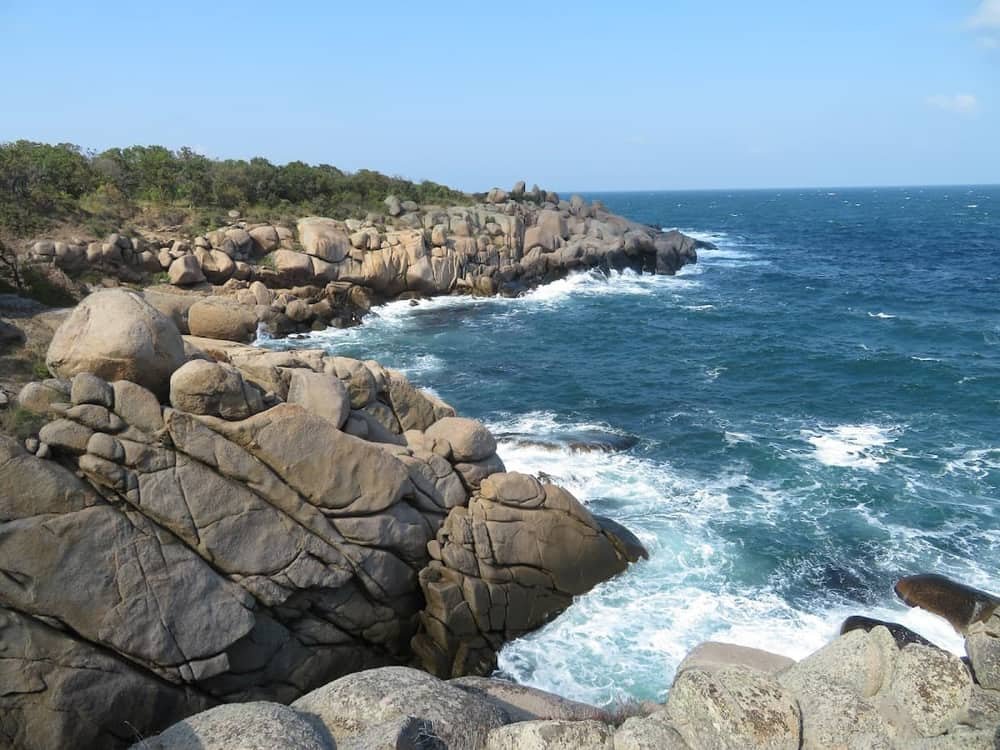
In the afternoon, drive north to Cape Kaliakra, a tongue of reddish rock reaching some two kilometres into the sea. The cliffs, the fortress ruins and the legend of the forty maidens who are said to have leapt rather than be taken captive make Kaliakra one of the most memorable spots on the coast. Return to base for sunset.
Day 3 — A beach day in the north
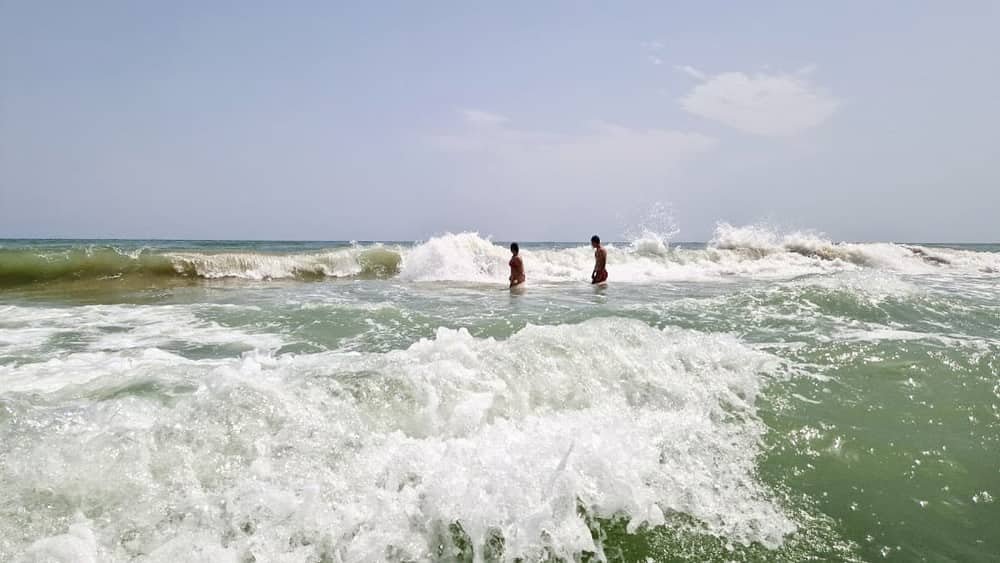
The third day is for the slow rhythm. Spend the morning on the beach, rent a lounger, swim early while the sea is calm. At lunch, try a gyuvech (a clay-pot bake) or kavarma. In the afternoon, if you want to move, walk in the nature-park forest behind the resorts or take a short run out to the inland villages.
This is also a good day to plan the next morning's move to the south: the Varna–Burgas drive takes a comfortable two to three hours on the main road, but build in breaks.
Day 4 — South, with a stop at Nessebar
You leave the north and head south. Halfway down comes the great surprise: Nessebar, a UNESCO-listed old town set on a slim peninsula joined to the mainland by a sandy isthmus. Leave the car at the entrance and walk in — the lanes are narrow and stone-paved.
Nessebar is a palimpsest: Thracian and Byzantine walls, medieval churches of stone and brick (many in picturesque ruin), and Bulgarian National Revival houses with timber upper floors that overhang the street. It is crowded at midday, so come early or toward evening. Eat somewhere with a sea-facing terrace and try a local white wine.
By evening, settle into the south: you might choose Sozopol (more bohemian), Sunny Beach / Sveti Vlas (livelier, next to Nessebar) or Burgas (a real, lived-in city). For a stay with character, we recommend Sozopol.
Day 5 — Sozopol's old town
Sozopol is, for many, the soul of the southern coast. Founded by Greeks in antiquity as Apollonia, the old town occupies a peninsula of timber and stone houses, courtyards with fig trees and vines, artists' studios and small churches. It is smaller and more intimate than Nessebar and rewards a slow visit, with coffee stops along the way.
- Walk the cliff-top promenade above the sea.
- Drop down to one of the town's two beaches for a swim.
- In the evening, have a fish dinner in the old town: tsatsa (small fried fish), squid, or grilled fish with lemon.
If you are in Sozopol in early September, you might catch the Apollonia Festival, a long-running cultural event.
Day 6 — Lagoons, salt and flamingos: Pomorie and Burgas
The south is not only beaches. Between Sunny Beach and Burgas lies Pomorie, known for its lagoon lake and its traditional salt pans, where salt and therapeutic mud are still harvested much as they were a century ago; there is a small open-air salt museum. The salty water draws birds, and in spring and autumn you can spot flamingos and pelicans on the lakes around Burgas.
Burgas itself is worth an afternoon: its Sea Garden, a long and easygoing promenade, a lively pedestrian centre, and less of the tourist gloss of the resorts. The four lakes ringing the city (Atanasovsko, Burgasko, Mandrensko, Pomoriysko) form one of the most important birding areas in Europe — bring binoculars.
For an extra bit of adventure, at the far southern end toward the Turkish border begins Strandzha, the wildest mountain on the coast, with traditional villages and near-empty beaches — a world apart, if you have a spare day.
Day 7 — A last swim and the road home
Dose the final day by how far you have to drive back. A morning swim, a long coffee on the promenade, last purchases: honey, rose-petal jam or rose oil (from the Rose Valley inland), a local wine, perhaps some painted ceramics from the market.
Then head north for the border. Remember: the vignette must still be valid for the return day, and the border crossing, with no checks, is a formality. If you leave early, you can squeeze in one last stop — at Nessebar or a wild beach — before joining the road home.
Variations and detours
The coast links easily to inland Bulgaria if you want to turn the end of the trip into a mini tour:
- Veliko Tarnovo — the medieval capital, with the Tsarevets fortress perched on its hill, about three hours from Varna. Ideal as a stop on the way back west.
- The Rose Valley / Kazanlak — for those heading to the centre of the country: rose distilleries and Thracian tombs.
- Plovdiv — the old town of Revival houses and a Roman theatre, if you have time for a wider loop.
Final practical notes
- Accommodation is most expensive in July–August; June and September bring warm sea, gentler prices and emptier beaches (indicative — check for your dates).
- Beach parking and loungers are paid separately at the resorts; keep small change or a card handy.
- Water and sun: the sea is gentle, but the midday sun is strong — hat, cream, hydration.
- Food: seek out the places a street back from the seafront, where locals eat; the value is far better than on the front line.
- Pace: resist the urge to tick everything off. The Bulgarian coast is best savoured by leaving room for one more swim and one unhurried sunset.
FAQ
How should I split the week between the north and the south? The guide suggests three or four nights in the north (the Varna–Golden Sands–Albena area) and three nights in the south (Burgas–Sozopol–Sunny Beach), with a single relocation mid-week. The idea is not to move every day, but to run the major excursions from two fixed bases.
Do I need a vignette to drive in Bulgaria? Yes. An electronic vignette is mandatory on national roads and motorways and is tied to your number plate. Buy it online or at filling stations near the border before you join the tolled roads; short multi-day options exist and suit a holiday.
Is there still a border stop between Romania and Bulgaria? No. Both countries are in the Schengen area, so the land border no longer has passport or ID checks. You cross the Giurgiu–Ruse bridge or pass through Vama Veche–Durankulak without stopping at a booth, though it is sensible to carry your ID anyway.
When is the best time for this itinerary? July and August are the peak, with the most expensive accommodation. June and September bring warm sea, gentler prices and emptier beaches (indicative — check for your dates).