Bulgaria is a surprisingly easy country to travel, once you find its rhythm. Distances are short — getting from the Danube to the Black Sea, or to the ridgelines of the Rila mountains, rarely costs you more than a day on the road — and since 1 January 2025 things have become even simpler for travellers arriving from Romania: Romania and Bulgaria are both inside the Schengen Area, so the land border between the two no longer has passport or ID checks. You cross the Giurgiu–Ruse bridge, or the Vama Veche–Durankulak point on the coast, much as you would move between two regions of the same country. Bulgaria has also adopted the euro, though during the transition the lev (lv) still circulates in parallel — you will sometimes see prices displayed in both currencies.
This guide walks you through every way of moving around once you are there: trains and buses between cities, hiring a car (and the compulsory electronic vignette), taxis and ride-hailing apps, public transport in Sofia, Plovdiv and Varna, and how you actually reach the coastal resorts and the ski domains.
Trains: slow, cheap, scenic
The Bulgarian railway, run by BDŽ, is not fast, but it is inexpensive and, on certain lines, genuinely beautiful. The network links Sofia with Plovdiv, Burgas, Varna, Veliko Tarnovo (via Gorna Oryahovitsa) and many smaller towns inland. The fast / express and Intercity services are the ones you want for long distances; the all-stops local trains (*putnicheski*) call at every halt and can double your travel time.
- Sofia–Plovdiv is the busiest rail link: frequent and comfortable, roughly two to three hours depending on the service.
- Sofia–Burgas and Sofia–Varna are long hauls — on the order of seven to eight hours, indicatively — often done overnight, or by day if you want the landscape.
- The narrow-gauge Septemvri–Bansko line is one of the most beautiful train journeys in the Balkans: it climbs slowly through the mountains via Velingrad up to Bansko, and is an experience in its own right, not merely a means of transport.
A few practical notes: buy your ticket at the station counter ahead of departure (seat reservation is possible on Intercity trains). Cards are accepted at major stations, but carry cash for the small ones. Mind the alphabet on the boards — timetables and destinations are frequently written in Cyrillic, so it pays to recognise your town's name (София = Sofia, Пловдив = Plovdiv, Бургас = Burgas, Варна = Varna).
Buses: the backbone of intercity travel
For most routes, the bus beats the train on speed and frequency. Operators such as Union Ivkoni, Biomet, Etap-Grup and others cover a dense network between every major city and many smaller towns. Coaches are generally modern, air-conditioned and punctual.
- Sofia–Plovdiv by bus takes around two hours and departs very often — you rarely need to book ahead.
- Sofia–Burgas / Sofia–Varna run in roughly five to six hours (indicative), with multiple daily departures including overnight services.
- For Veliko Tarnovo, Bansko or Ruse, the bus is often the most sensible choice.
Major cities have bus stations (*avtogara*) — Sofia's central one sits right beside the railway station, making it easy to switch between the two. Buy tickets at the counter or, with some operators, online. On busy peak-season routes (summer, towards the coast) it is worth buying the day before. Fares are low by Western European standards, but I will avoid quoting exact sums — they vary by operator and season.
Hiring a car and the vignette
If you want full freedom — especially for places that are awkward to reach by public transport, such as Rila Monastery, Belogradchik, Krushuna Falls, the village of Melnik, or the Rose Valley around Kazanlak — a car is the answer. Hire is straightforward at the airports in Sofia, Burgas and Varna and in the larger cities.
The single most important thing to know: on Bulgaria's national roads and motorways you need a compulsory electronic vignette (e-vinetka). There is no longer a sticker on the windscreen — the system is fully digital and tied to your number plate.
- You buy the vignette online via the official platform, at border terminals and machines, at petrol stations or at post offices.
- Options include weekend, day-based (e.g. a few consecutive days), weekly, monthly and annual validity — choose according to how long you stay.
- Bulgarian rental cars usually already carry a valid vignette — confirm this with the rental company before you set off. If you bring your own car from Romania, buy the vignette before or at the border crossing, as driving without one carries a fine.
Other useful things behind the wheel in Bulgaria:
- Headlights on are mandatory all year round, day and night.
- Drink-driving: effectively zero tolerance — do not risk it.
- Fuel costs, indicatively, around 2 euro per litre (both petrol and diesel) — check at the pump, prices fluctuate.
- The main motorways (Trakia: Sofia–Plovdiv–Burgas; Hemus, still being completed in sections, towards Varna) are good. Secondary mountain roads, by contrast, can be narrow and winding — allow extra time.
- Seatbelts are required for all passengers, and child seats are mandatory.
Taxis and ride-hailing apps
In cities, taxis are affordable but warrant a little caution. Yellow taxis are the standard; the fare must be displayed on the window and the meter started when you get in. Avoid cars without clear markings, or those that "forget" to switch on the meter, especially in tourist areas and at the airport.
The safest bet for transparency is an app. In Bulgaria the following work well:
- Bolt — available in Sofia, Plovdiv, Varna, Burgas and other cities; you order, see the estimated price and pay by card in the app. It is most travellers' preferred option.
- Yellow! / TaxiMe and other local apps — handy for hailing an officially licensed taxi at a fair rate.
At the airport, ignore the pushy offers in the hall and use either the app or the official taxi rank. For long transfers (an airport-to-resort run, say), a price agreed in advance or a transfer booked online spares you any surprises.
Public transport in the cities
Sofia The capital has the best public transport in the country: a metro, trams, trolleybuses and buses. The metro is clean, fast and runs straight to the airport (the line to Terminal 2) and to the main points of interest — it is the easiest way into town on arrival. Use a rechargeable card or tap contactless with your bank card at the validator where available. Tickets are cheap and validated on boarding.
Plovdiv The city is best seen on foot — the Old Town, with its Revival-era houses and Roman theatre, is compact and pedestrianised. For longer distances there is a network of buses, with tickets usually bought from the driver. For a visitor, though, Plovdiv is a pleasure to explore at walking pace.
Varna The "maritime capital" has buses and trolleybuses linking the centre, the station, the beach and the suburbs. The centre, the Sea Garden and the seafront are comfortably walkable. To reach the nearby resorts (Golden Sands, Albena, Sveti Konstantin) there are regular buses departing from the city.
Reaching the coastal resorts
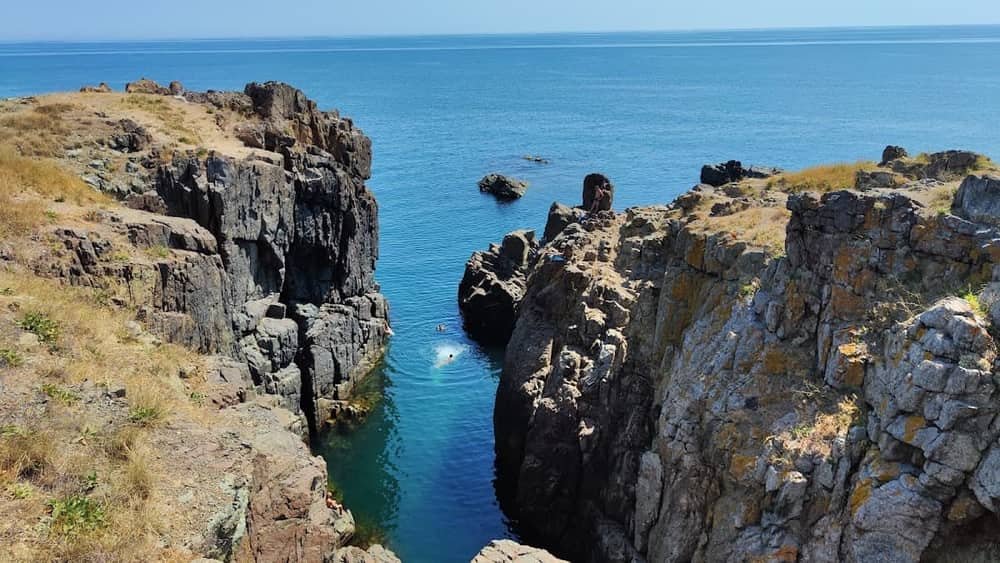
The Bulgarian coast splits, broadly, around two gateways: Varna in the north and Burgas in the south, each with an airport.
- Golden Sands, Albena, Sveti Konstantin i Elena lie north of Varna; reach them by bus from Varna or by transfer. Albena runs its own internal transport system in summer.
- Sunny Beach, Nessebar, Sveti Vlas, Pomorie orbit Burgas; buses and transfers run from Burgas airport and bus station to all of them. Nessebar, a UNESCO museum-town, is linked directly to Sunny Beach by a very frequent local bus — you can effectively stay in one and visit the other without a car.
- Sozopol, further south of Burgas, is reached by bus from Burgas bus station in under an hour.
In summer, service frequency rises noticeably; off-season, check timetables ahead, as some connections thin out.
Reaching the mountains and ski domains
For meadows, hiking and skiing, the three names to know are Bansko (Pirin), Borovets (Rila) and Pamporovo (Rhodopes).
- Bansko has good bus links from Sofia (around three hours, indicative) and that splendid narrow-gauge railway from Septemvri, if you have time and want the scenery.
- Borovets is the closest to Sofia — under two hours — reached by bus to Samokov and on to the resort, or by direct transfer.
- Pamporovo, in the heart of the Rhodopes, is most easily reached via Plovdiv, from where buses run to Smolyan and the resort.
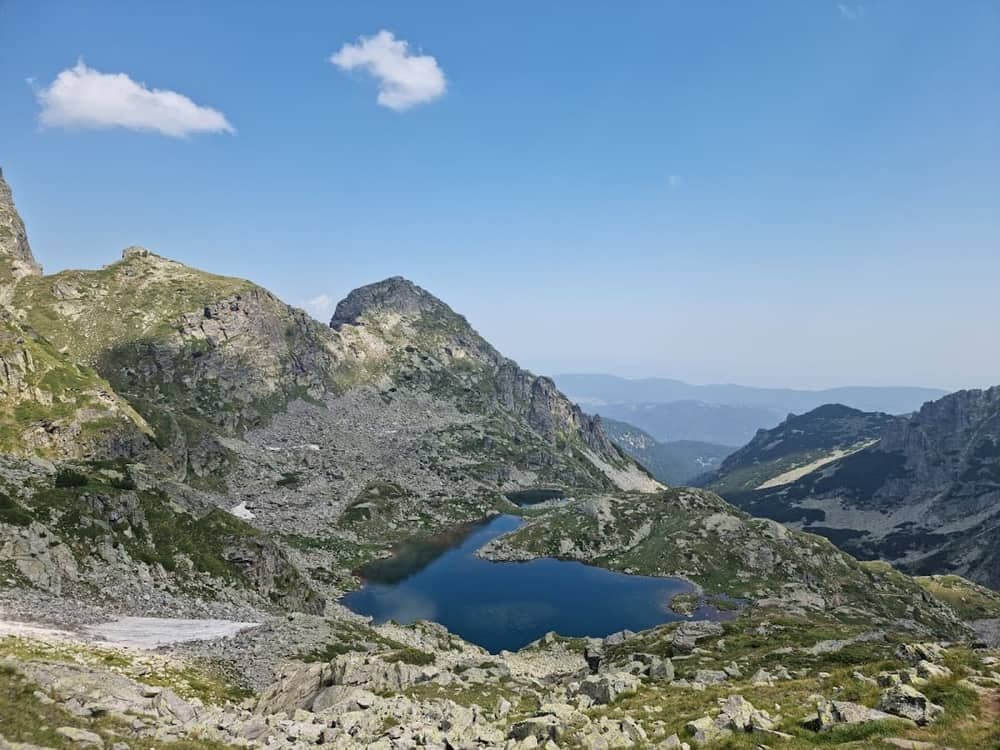
For nature lovers too: the Seven Rila Lakes are most comfortably visited by car or on an organised tour up to the Pionerska chairlift; Rila Monastery and Bachkovo are reached by car or on day trips from Sofia and Plovdiv respectively; while places like Troyan, Rozhen or Belogradchik reward the effort of having the wheel in your own hands.
In short, what to choose
- No car, between big cities: the bus, almost always the best blend of speed, price and frequency.
- For scenery and a slow pace: the train, especially the Septemvri–Bansko line.
- For freedom and out-of-the-way places: a hire car — don't forget the vignette.
- In town: Sofia by metro, Plovdiv on foot, Varna by bus plus walking; for taxis, use Bolt.
With short distances, barrier-free borders and a dense bus network, Bulgaria is a country built for stress-free exploring. The one thing you do not want to forget, if you are driving, is the vignette — the rest takes care of itself.
FAQ
Do I need a vignette to drive in Bulgaria? Yes, an electronic vignette (e-vinetka) is compulsory on national roads and motorways, tied to your number plate with no windscreen sticker. Buy it online, at border terminals, petrol stations or post offices, in options from weekend to annual. Rental cars usually already carry one — confirm with the rental company.
Train or bus between cities? For most routes the bus beats the train on speed and frequency — Sofia–Plovdiv takes around two hours with very frequent departures. The train is the choice for scenery, especially the narrow-gauge Septemvri–Bansko line, one of the most beautiful in the Balkans.
Which taxi app works in Bulgaria? Bolt works well in Sofia, Plovdiv, Varna, Burgas and other cities: you order, see the estimated price and pay by card, and it is most travellers' preferred option. For regular taxis, take only yellow cars with the fare on the window and the meter started when you get in.
How do I reach the coastal resorts without a car? The coast has two gateways with airports: Varna in the north and Burgas in the south. Regular buses run from Varna to Golden Sands, Albena and Sveti Konstantin, and from Burgas to Sunny Beach, Nessebar, Sozopol and Pomorie. Nessebar is linked to Sunny Beach by a very frequent local bus.