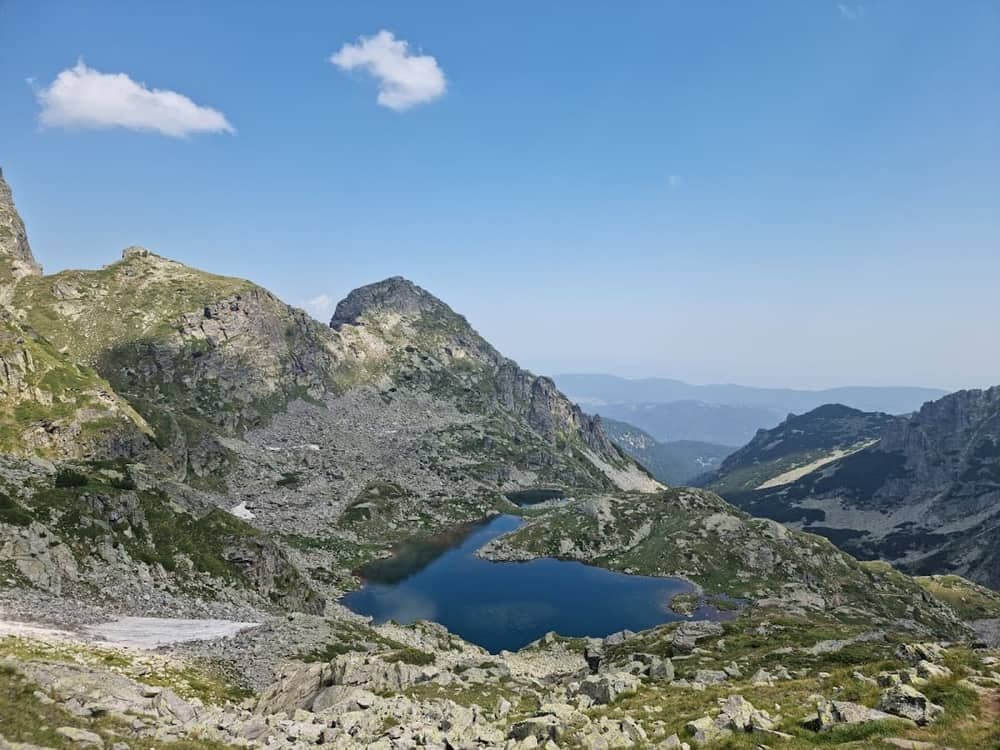
Bulgaria is one of South-East Europe's most underrated destinations: a generous Black Sea coast, mountains with serious winter snow, painted monasteries, towns thousands of years old, and a cuisine worth the trip on its own. The good news for any first-time visitor is that, in recent years, it has also become remarkably easy to visit. This guide gathers the concrete things you actually look up before you go — no brochure clichés, just the information you genuinely need.
Currency: the euro
Bulgaria's official currency is now the euro. You pay for everything in euro, exactly as you would at home if you come from the eurozone — no exchange fees, no mental arithmetic.
During an initial transition period you may still see prices displayed twice — in euro and in lev (the old currency) — and in some places lev may still be accepted for a while. The key point: the euro is the currency. You don't need to change money into lev, and you don't have to worry about an exchange rate. If you happen to get change in lev, you can spend it or swap it, but there's no need to plan anything around the old currency.
Cards work almost everywhere — restaurants, shops, petrol stations, hotels — and contactless is standard. A little cash is handy only for markets, monasteries (donations, candles), public toilets and tips.
The border and Schengen: no checks
Both Romania and Bulgaria are part of the Schengen area. In practice this means that crossing the land border between the two countries involves no passport or ID control. You simply drive or walk through, as if crossing from one county to the next.
The main crossings are:
- The Giurgiu–Ruse bridge over the Danube, the classic route from Bucharest into the Bulgarian interior and on to Veliko Tarnovo, Plovdiv or the mountains.
- Vama Veche–Durankulak on the coast, the easiest route to the Black Sea resorts (Albena, Golden Sands, Varna).
Even though there's no border check, always carry a valid ID document (national ID card or passport) — you'll need it to check into accommodation and for any spot check. Travellers from outside the EU are subject to the usual Schengen entry rules.
Language and the Cyrillic alphabet
The official language is Bulgarian, written in the Cyrillic alphabet. It can look daunting at first, but you adjust quickly, and many tourist signs and menus also appear in Latin script or English. In resorts and big cities English is widely spoken, and many older Bulgarians understand Russian.
A few words that make life easier (with rough pronunciation):
- Здравейте (zdravéite) — hello
- Благодаря (blagodaryá) — thank you
- Моля (mólya) — please / you're welcome
- Да / Не (da / ne) — yes / no
- Колко струва? (kólko strúva) — how much is it?
- Сметката, моля (smétkata, mólya) — the bill, please
One cultural quirk that catches many visitors off guard: in Bulgaria, a vertical nod often means "no", while shaking the head side to side can mean "yes" — the opposite of what most travellers expect. Don't rely on the gesture alone; confirm verbally.
When to go, by interest
Bulgaria has sharply distinct seasons, and the ideal time depends entirely on what you're after.
Beach and coast June to September is coast season. July and August are hottest and busiest, with warm sea and resort life in full swing — ideal for families and for anyone wanting buzz (Sunny Beach, Sveti Vlas, Golden Sands). June and September bring good weather, gentler prices and quieter beaches — perfect for couples and for Sozopol, Nessebar or Pomorie, where the charm of the old towns matters as much as the sea.
Skiing and winter mountains December to March for snow. Bansko is the best-known resort, with serious terrain and lively après-ski, followed by Borovets and Pamporovo; Chepelare is a quieter alternative. January and February offer the most reliable snow.
City and culture May–June and September–October are the golden windows. The weather is mild, the light is lovely for photography, and places like Plovdiv, Veliko Tarnovo, Rila Monastery or the Rose Valley (which blooms in late May and early June) can be enjoyed without the heat or peak crowds. Late spring is also the best time for the Seven Rila Lakes and for hiking.
A rough daily budget
Bulgaria remains one of the most affordable destinations in the EU, although prices have risen in the top tourist areas. The figures below are approximate, per person, per day:
- Budget (guesthouse or hostel, meals in local eateries, public transport): roughly €40–60 a day.
- Mid-range (3-star hotel, good restaurants, a few attractions and transport): about €70–120 a day.
- Comfort (4–5 star hotel, refined dining, private excursions): from €150 upward.
Coastal accommodation at peak season, and Bansko in high ski season, is where you'll pay the most; in the cities and out of season, your money stretches a great deal further.
Connectivity, SIM and roaming
If your mobile plan is from an EU country, "roam like at home" applies: you use the minutes and data in your package at no extra cost, exactly as in your home country. For most EU visitors, there's nothing to do at all.
If you're coming from outside the EU, or need a lot of data, a local SIM card or an eSIM is a cheap solution — Bulgarian operators have very good coverage, including along the coast and in the mountain valleys. SIMs are sold in operator shops, airports and supermarkets; activation may require an ID document. Free Wi-Fi is near-universal in hotels, cafés and restaurants.
Safety
Bulgaria is generally a safe country for tourists. Violent crime against visitors is rare; the usual concerns are ordinary urban common sense:
- Watch for pickpockets in crowds, markets and on public transport, as in any tourist destination.
- Use official taxis with a meter and the rate displayed in the window; avoid cars touting for fares in tourist zones, and agree the price in advance.
- On the beach and in the mountains, respect warning flags and trail markings — the Black Sea can have currents, and the Bulgarian mountains demand proper gear and caution.
The single European emergency number is 112, and it works in English.
Electricity and plugs
The supply is 230 V, 50 Hz, the same as most of continental Europe. Sockets are type F (Schuko), with two round pins — so travellers from Romania and most of mainland Europe need no adapter. Visitors from the UK, Ireland or overseas will need one.
Tipping
Tipping is appreciated but relaxed. In a restaurant, adding around 10% for good service is the norm; sometimes people simply round the bill up. Check whether a "service charge" is already included. For taxi drivers and hotel staff, rounding up or a couple of euros is a kind gesture rather than an obligation.
Health and pharmacies
EU visitors are covered for necessary public healthcare by the European Health Insurance Card (EHIC) — bring it with you. Wherever you come from, travel insurance that also covers private care and repatriation is strongly recommended, especially if you ski or hike in the mountains.
Pharmacies (Аптека, "Apteka") are plentiful and well stocked; in big cities and resorts you'll find 24-hour ones. Pharmacists are very helpful for minor ailments. Tap water is generally safe to drink in towns and resorts, though many people prefer bottled water, which is very cheap.
Food and drink to try
Bulgarian cuisine is one of the real reasons to make the trip — generous, fresh, Mediterranean at heart.
- Shopska — the signature salad: tomatoes, cucumber, peppers and a snowfall of grated white cheese.
- Banitsa — a flaky filo pastry with cheese, the classic breakfast.
- Kavarma and gyuvech — slow-baked stews in a clay pot, with meat and vegetables.
- Kebapche and kyufte — grilled meats, the stars of any meal with friends.
- Tarator — a cold yoghurt soup with cucumber and dill, a lifesaver in the heat.
- Lukanka and sirene — cured sausage and white cheese, found on every table.
For drinks, rakia (fruit brandy) traditionally opens a meal, and Bulgaria has excellent wines, especially reds from the Rose Valley and the south (Mavrud, Melnik). Bulgarian yoghurt and ayran (a savoury yoghurt drink) are part of the country's very identity.
Getting around
By car The greatest freedom, especially for the coast and the monasteries. A few essentials:
- To drive on Bulgarian roads you need an electronic vignette (e-vignette), bought online, at the border or at petrol stations before you set off. There's no physical sticker on the windscreen — it's all linked to your number plate — but paying is mandatory.
- Fuel costs around €2 per litre for both petrol and diesel (approximate).
- Driving is on the right. Main roads and motorways are good; in rural and mountain areas, take care on narrow roads and switchbacks.
By bus The coach network is the backbone of Bulgarian public transport: dense, cheap and reasonably comfortable, linking every major city and resort. For routes like Sofia–Plovdiv, Sofia–Burgas or to the coast, the coach is often the most practical option. Tickets are bought at bus station (avtogara) counters or online.
By train Trains are slower than coaches and less frequent, but cheap and scenic on certain routes. The line to Plovdiv is convenient, and the mountain routes offer beautiful views. For speed, choose the coach; for charm and a relaxed pace, the train has its place.
---
With the euro as currency, no border checks and a solid transport network, Bulgaria is more accessible than ever for Romanian and foreign visitors alike. Pack an ID, your card, a vignette if you're driving, and an appetite for discovery — the rest takes care of itself.
FAQ
What currency do I use, and do I need to change money? The official currency is now the euro, so you don't need to change money into lev and there's no exchange rate to worry about. During the transition you may see prices shown in both euro and lev, and lev may still be accepted for a while, but cards work almost everywhere, with contactless standard.
Do I need a plug adapter? No, if you come from most of continental Europe: the supply is 230 V, 50 Hz, and sockets are type F (Schuko), with two round pins — the same as at home. Visitors from the UK, Ireland or overseas will need an adapter.
How much should I budget per day? Approximately, per person: budget (guesthouse or hostel, local eateries, public transport) €40–60 a day; mid-range (3-star hotel, good restaurants, a few attractions) about €70–120; comfort (4–5 star hotel, private excursions) from €150 upward. You'll pay the most on the coast at peak season and in Bansko in high ski season.
What should I know about the language and local customs? The official language is Bulgarian, written in the Cyrillic alphabet, but English is widely spoken in resorts and big cities, and many menus and signs also appear in Latin script. One quirk that catches visitors off guard: a vertical nod often means "no" while shaking the head side to side can mean "yes" — always confirm verbally.