Bulgaria's Black Sea coastline runs for nearly 380 kilometres, from the Romanian border in the north to the Turkish frontier in the south. For travellers from Romania and beyond, it is one of the easiest sea escapes in this corner of Europe: the water is warmer and clearer than on much of the neighbouring coast, the towns are genuine rather than purpose-built, and the cost of a holiday still compares favourably with Greece or the western Mediterranean. This guide explains how the coast is organised, which resort suits whom, when to go, how to get there, and roughly what it all costs.
North versus south: two different coasts
Bulgaria effectively has two coastlines with distinct characters, divided by the city of Burgas and its broad bay.
The northern coast revolves around Varna, Bulgaria's maritime capital — a lively, leafy city with a magnificent Sea Garden and a real urban life that outlasts the summer season. North of Varna lie the classic resorts: Albena, designed almost entirely for families, with a wide beach and shallow, gently shelving water; Golden Sands, the best-known resort, where tall hotels press against a spectacular beach and the nightlife runs hard; and, further up, the small town of Balchik, with its famous palace and botanical garden once belonging to Queen Marie of Romania — a place of particular historical resonance.
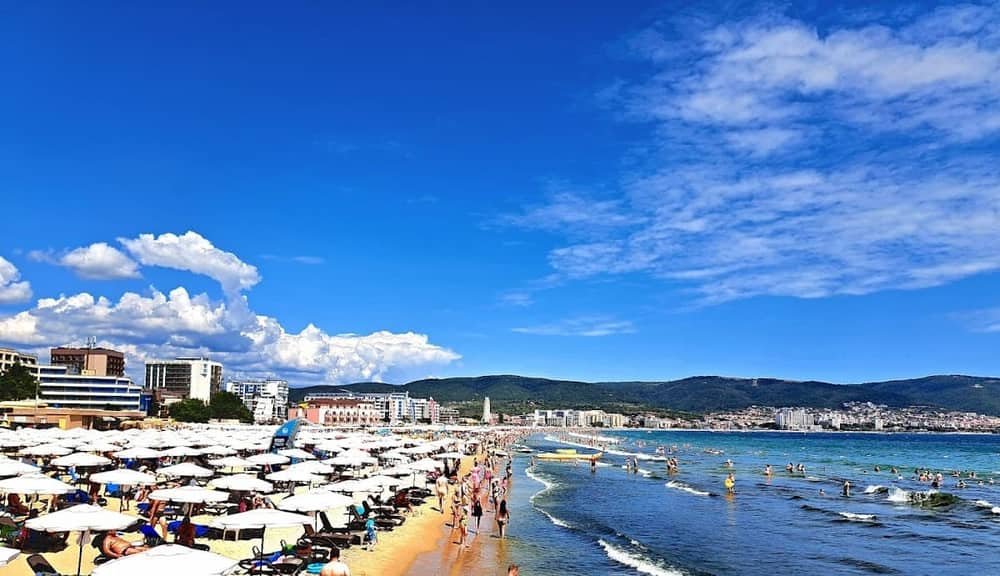
The southern coast, running from Burgas towards the Turkish border, is more varied in scenery and, in many places, more relaxed. Here you find Sunny Beach, the largest and loudest resort in the country, a kingdom of clubs and endless sand; beside it, the museum-town of Nessebar, an ancient peninsula on the UNESCO World Heritage list, threaded with medieval churches and cobbled lanes; Sveti Vlas, a newer, smarter resort with a modern marina; and further south the jewel of the coast, Sozopol, a fishing town of timber houses, art galleries and a bohemian charm unlike anywhere else on the shore. The south also holds Pomorie, known for its therapeutic mud lakes and its salt.
Which resort suits you
There is no single "best" resort — only the right one for you. In brief:
- For families with children: Albena and Golden Sands in the north, Sveti Vlas and the quieter end of Sunny Beach in the south. Shallow water, fine sand, all-inclusive hotels and water parks.
- For parties and nightlife: Sunny Beach is the obvious choice, with Golden Sands a close second. Beach clubs, bars and dancing until dawn.
- For couples and romance: Sozopol, without question, for its sunsets over the old town, followed by Nessebar and Sveti Vlas.
- For quiet and authenticity: Sozopol out of high season, the small southern villages, and Balchik and its surroundings in the north. Anyone seeking calm should avoid Sunny Beach in July and August.
- For a real city, not just a resort: Varna and Burgas, both with their own beaches but also museums, restaurants and year-round local life.
When to go
The season on the Bulgarian coast runs broadly from May to September.
- May and early June: pleasant weather, low prices, empty beaches — but a sea still on the cool side for swimming. Ideal for those who want calm and long walks.
- July and August: the peak. Warm water (around 24-26 °C), long sunny days, but also the highest prices and the biggest crowds. Book well ahead.
- September: arguably the best month of all. The sea stays warm after the long summer, the crowds thin out and prices begin to fall. The Bulgarian "late summer" is a connoisseur's secret.
By October the air turns cool and many resort hotels close, so out of season it is really the cities — Varna and Burgas — that remain rewarding.
Getting there from Romania
The most convenient option is your own car, and the good news is that the journey has become far simpler.
The border no longer means a stop. Romania and Bulgaria are both part of the Schengen area, so crossing the land border — whether on the Danube bridge between Giurgiu and Ruse, or on the coast at Vama Veche–Durankulak — involves no passport or ID control. You pass from one country to the other almost as you would between two regions. Carry your ID document all the same, just in case.
You need an electronic vignette. To drive on Bulgarian roads you must buy an e-vignette, tied to your number plate. Get it online before you leave, or at the petrol stations and points near the border, before you join the Bulgarian road network. There are options for a few days, a week, a month or a year — for an ordinary holiday the short vignette is plenty. Driving without one carries a fine.
Fuel costs roughly 2 euro per litre, for both petrol and diesel (approximate), with modern stations along all the main routes. Distances are reasonable: from the Giurgiu–Ruse bridge to the coast is a few hours' drive, depending on your resort and the traffic.
By coach, there are regular services from several Romanian cities to Varna, Burgas and the larger resorts, especially in season — a comfortable alternative if you would rather not drive. Travellers coming from further afield can fly into Varna or Burgas airports, both well connected in summer, and hire a car on arrival.
A suggested 5-7 day itinerary
If you want to see more than a single beach, this route captures the essence of the southern coast, the richest in charm:
- Day 1 — Arrival in the south, Sunny Beach or Sveti Vlas. Check in, ease into the beach, first dinner of fish by the sea.
- Day 2 — Nessebar. A full day in the UNESCO old town: medieval churches, the walls, the lanes, lunch with a sea view. A short hop from Sunny Beach.
- Day 3 — Beach and rest. A lazy day for the sea, water sports, or a water park if you have children.
- Day 4 — Sozopol. South along the coast, a full day in the old fishing town: galleries, timber houses, nearby beaches, and sunset over the peninsula.
- Day 5 — Burgas and Pomorie. The Sea Garden in Burgas, the mud lakes and salt pans of Pomorie, perhaps a tasting of local salt and wine.
- Days 6-7 (optional) — heading north. With time to spare, drive up to Varna and Balchik: the Sea Garden, Queen Marie's palace, and a final beach day at Albena or Golden Sands before the road home.
Those after a pure beach holiday can, of course, settle into a single resort for the whole week — the coast suits both rhythms.
Food and dining on the coast
Bulgarian cooking is one of the great pleasures of a holiday here — generous, fresh and easy to love.
- Shopska — the national salad of tomato, cucumber and pepper under a snowfall of grated sirene cheese; order it at your first meal.
- Fish and seafood — fresh all along the coast. Look for tsatsa (small sprat, fried crisp), grilled turbot and mussels.
- Grilled meats — kebapche and kyufte, close cousins of the Balkan grill, at almost any tavern.
- Banitsa — a flaky cheese pastry, perfect at breakfast.
- Local wine and rakia — Bulgaria makes good, surprisingly cheap wine, and rakia (the local fruit brandy) opens nearly every meal.
Beyond the hotel restaurants, seek out the fishermen's taverns of Sozopol and Nessebar and the seafront terraces of Varna and Burgas, where you tend to eat better — and often more cheaply — than in the big resorts.
A rough budget
Bulgaria remains excellent value, though prices in the big resorts climb at the height of summer. Note that the official currency is now the euro. During the transition period prices may still be shown in both euro and lev, and lev may still be accepted for a while, but the euro is the reference — there is no longer any need to fret about changing money as travellers once did. Cards are widely accepted.
As a general guide (approximate, and varying a great deal by resort and season): a decent resort hotel, a restaurant meal of fresh fish, local transport and a few attractions will, for most travellers, come in under the cost of a comparable trip to Greece or the western Mediterranean. For those driving, the main variable cost is fuel, at around 2 euro a litre, plus the vignette. The July–August peak is noticeably dearer than May, June or September.
Practical notes
- Currency: euro. During the transition, dual euro/lev pricing may appear for a time; cards work everywhere.
- Border: no frontier control between Romania and Bulgaria (both in Schengen). Carry your ID all the same.
- Vignette: required for Bulgarian roads; buy the e-vignette before you set off.
- Fuel: roughly 2 euro per litre, petrol and diesel (approximate).
- Season: May to September; peak in July and August; September warm and calmer.
- Language: Bulgarian, written in Cyrillic; English and sometimes Russian get you by in the resorts. A phone dictionary helps with road signs.
The Bulgarian coast is not one destination but a collection of very different places, from the all-night energy of Sunny Beach to the bohemian quiet of Sozopol. The secret to a good holiday here is choosing the resort that genuinely fits you — and now, with no border barriers and euros in your pocket, the journey from home to the sea has never been simpler.
FAQ
Which resort should I choose if I am travelling with children? For families, the guide recommends Albena and Golden Sands on the northern coast, and Sveti Vlas plus the quieter end of Sunny Beach in the south. These offer shallow, gently shelving water, fine sand, all-inclusive hotels and water parks.
When is the best time to visit the Bulgarian coast? The season runs broadly from May to September. July and August are the peak, with water around 24–26 °C but the highest prices and biggest crowds; September is often the best month of all, with the sea still warm and the crowds thinning out.
What currency do I use in Bulgaria? The official currency is now the euro. During the transition, prices may still be shown in both euro and lev, and lev may be accepted for a while, but the euro is the reference. Cards are widely accepted.
Which resort is best for parties and nightlife? Sunny Beach is the obvious choice, with Golden Sands a close second — beach clubs, bars and dancing until dawn. If you want romance or quiet instead, the guide points rather to Sozopol.