Bulgaria has a quiet way of being romantic. It doesn't bombard you with hearts or sell you brochure clichés — it simply sets in front of you a July evening that smells of fig and salt, a cobbled lane just wide enough for two clasped hands, a glass of red wine on a terrace where you can watch the mountains fade to orange. For a couple, that matters more than any all-inclusive resort: the intimacy of a place that refuses to hurry.
This guide doesn't promise you a "perfect" holiday, but a memorable one — old towns that look cut from a gentler century, sunsets you'll mention for years, a corner of the mountains where wine flows from cellars carved into rock, and a few concrete ideas for a short break for two.
Why Bulgaria, now
For travellers coming from Romania, Bulgaria has effectively become an extension of their own backyard. Romania and Bulgaria are now both in Schengen, and the land border between them has no passport or ID control — you cross the Giurgiu–Ruse bridge or the Dobruja frontier the way you'd cross from one county into the next. For a long weekend, that changes everything: leave on a Friday afternoon and you're at dinner by the sea, or in a Plovdiv square, the same evening.
A few practical things worth knowing before you set off:
- The currency is now the euro. The Bulgarian lev still circulates in parallel during this transition period, so you may get change in both. Cards work almost everywhere; keep some small cash for tiny wine cellars, village taverns and car parks.
- Driving on Bulgarian roads requires a mandatory electronic vignette. You buy it online or at petrol stations and it's linked to your number plate — there's no physical sticker anymore. Sort it before you join a motorway.
- Fuel costs around 2 euro per litre (petrol and diesel, indicative figures). Distances are reasonable: from the Danube border to the coast is generally about half a day of relaxed driving.
A note for couples: don't overfill your itinerary. Romantic Bulgaria is lived slowly — one destination a day, two at most, the rest left to chance.
The old stone towns: Nessebar and Sozopol
If there's one place where Bulgaria instinctively asks you to slow your step and lean closer to the person beside you, it's the old peninsula of a coastal town at dusk.
Nessebar sits on a narrow tongue of land joined to the mainland by an isthmus. Its old town, a UNESCO World Heritage Site, is a tangle of paved lanes, timber houses whose upper storeys jut out over stone ground floors, and Byzantine church ruins that surface at every corner. Walk without a map. Let yourselves get lost. Towards evening, when the coaches leave and the light turns to honey, the peninsula belongs again to locals and to the handful of couples who had the sense to stay. Find a west-facing terrace, order something cold, and watch the sun sink over the bay.
Sozopol, further south, is the more bohemian, more literary version of the same idea. Founded by the Greeks in antiquity as Apollonia, it has two souls: the old town, with the same timber houses and wind-worn stones, and an atmosphere of artists, festivals and small bookshops. It's less crowded than Nessebar and, for a couple, often more tender. The nearby beaches are quieter, and the fish taverns serve long, unhurried lunches.
The coast holds other corners where romance comes without effort: Sveti Vlas with its elegant marina and higher prices, Pomorie with its salt lakes and therapeutic mud, or the port city of Varna with its Sea Garden and the air of a place with real character. The big resorts — Sunny Beach, Golden Sands, Albena — are lively and full of energy, but for intimacy choose their edges, or the old towns next door.
Sunsets, the daily ritual
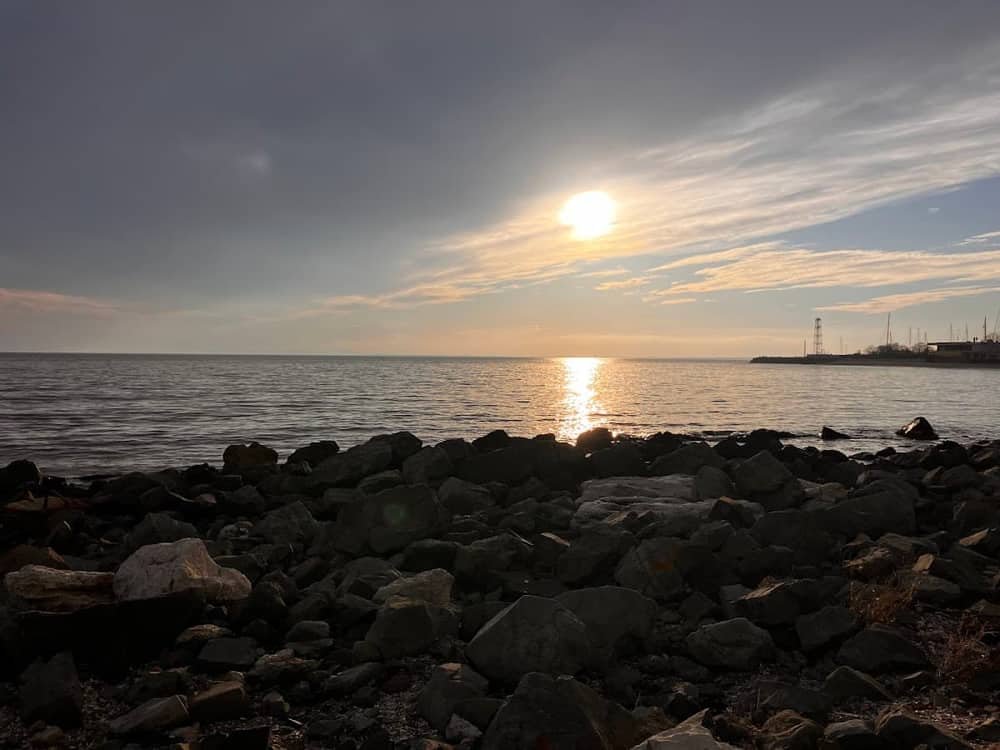
The Bulgarian coast faces east, so sunrises over the sea are spectacular — worth an early start at least once, coffee in hand on an empty beach. But the real romance of the day is the sunset, and for that you have to turn your back on the water.
The trick is simple: find a higher vantage point or a terrace that faces west, towards the land. On the Nessebar peninsula or from the old walls of Sozopol, the sun drops over stone rooftops and the bay, dyeing everything amber. In Varna, the Sea Garden offers long promenades made for exactly this hour. A thought for couples: don't photograph the sunset. Watch it. Almost no one regrets an evening they left the phone in their pocket.
Melnik and wine: the hidden south
Here the register changes completely. Leave the sea behind and head southwest, towards Melnik — the smallest town in Bulgaria, nestled at the foot of sand formations that rise like cathedrals of clay, sculpted by wind and rain.
Melnik has lived on wine for centuries. Its old houses, many built in the Bulgarian Revival style, hide cellars carved straight into the rock, where the temperature stays constant all year and where the dense, velvety local red is kept, made from the region's native grape. For a couple, an afternoon in Melnik has every ingredient: a tasting in a cool cellar, a long lunch on a shaded terrace, a walk to the nearby Rozhen Monastery, perched among the hills with old frescoes and a silence that recalibrates your breathing.
A few pointers for wine country:
- Tastings are often done right at the winery or in the cellars beneath the houses — ask at your accommodation; the small, personal bookings are the loveliest.
- Local grape varieties are worth seeking out deliberately; don't just ask for "red wine," ask for its story — the owners love to tell it.
- Pair Melnik with a stop at a nearby monastery for a wonderful contrast between the worldly and the sacred, all in a single day.
If wine is a shared passion, Bulgaria has other wine regions to explore on the way to or from the coast — but Melnik remains the most cinematic place for two.
Mountain and spa escapes
Bulgaria isn't only the sea. The mountain ranges inland hide some of the best couple's retreats in the Balkans, especially outside ski season, when the resorts grow quiet and the prices gentle.
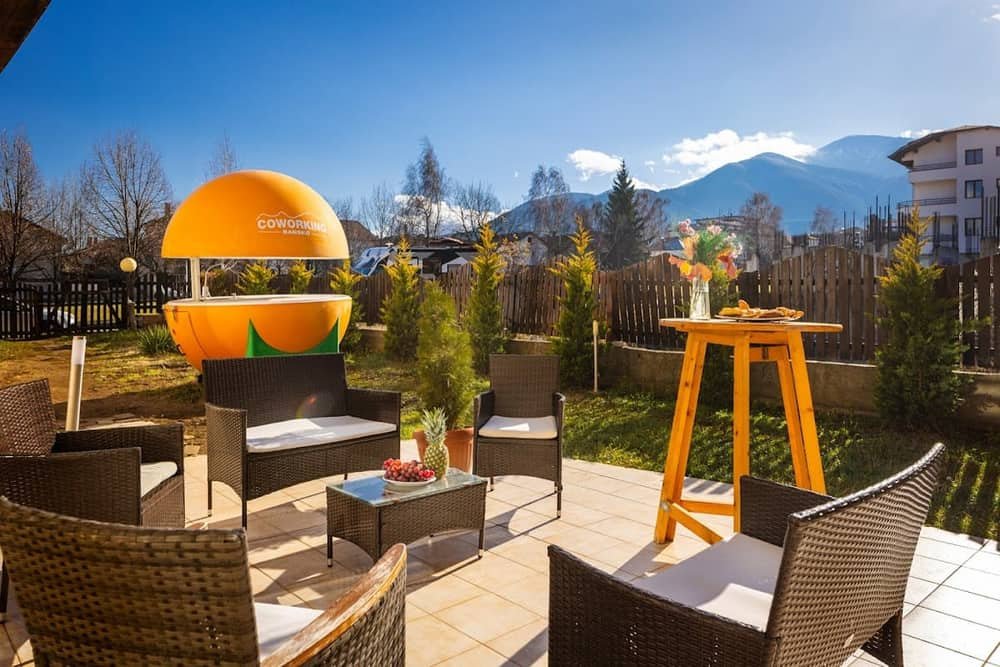
- Bansko, at the foot of the Pirin mountains, is known for skiing, but in summer and autumn it becomes an excellent base for hiking, with an old quarter full of warm mehanas (traditional taverns), open fires and hearty food.
- Borovets and Pamporovo offer the same mountain rhythm, with hotels that often include indoor pools, saunas and wellness areas — perfect for a relaxing evening after a day on the trails.
- Bachkovo and the Rila Monastery, the latter the country's most important monastery, are worth visiting for their sheer beauty; Rila, with its painted courtyards and the surrounding mountains, is one of the most striking sights in all of Bulgaria.
Bulgaria has a long thermal tradition — many towns sit on warm mineral springs, and thermal-water wellness is a genuine inheritance, not a trend. For a couple, the winning formula is simple: a day of gentle hiking, an evening in the sauna or thermal water, a slow dinner. Check what thermal facilities your accommodation offers — they vary widely from place to place (indicative; confirm when booking).
Boutique stays: where you sleep matters
For a couple, where you stay isn't a logistical detail — it's half the memory. Bulgaria has grown beautifully on the boutique front, far from the resort blocks.
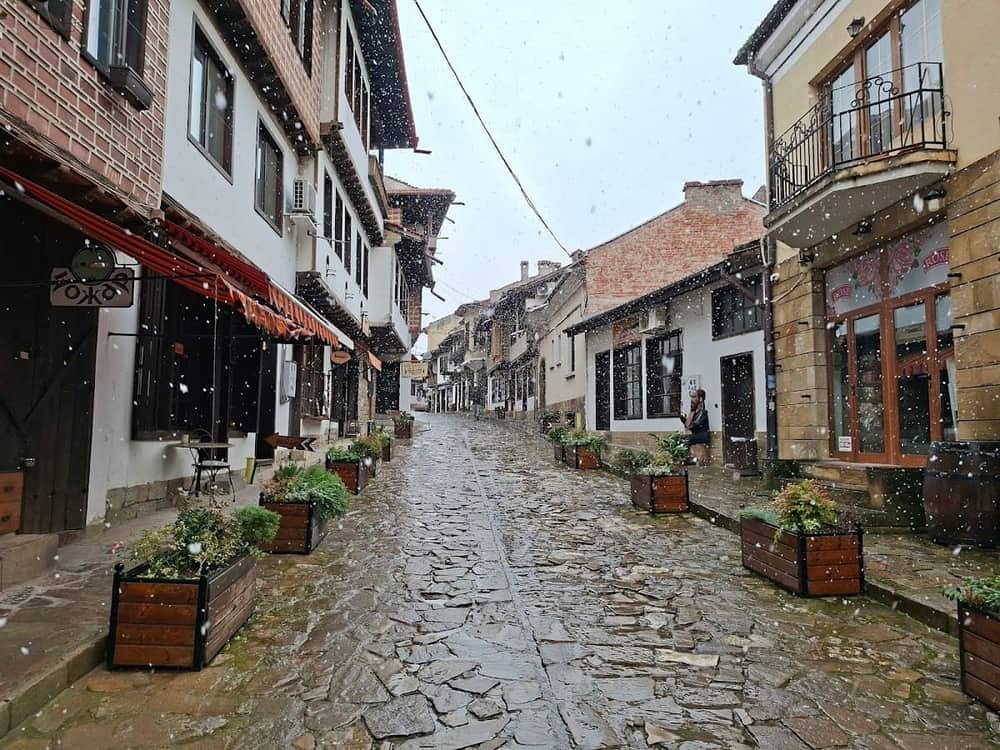
- In the old towns (Nessebar, Sozopol, but also Plovdiv or Veliko Tarnovo inland), look for restored traditional houses turned into small guesthouses, with inner courtyards, timber beams and just five or six rooms. Intimacy is guaranteed.
- In Plovdiv, the Old Town with its Bulgarian Revival mansions offers stays of rare charm — one of the oldest continuously inhabited cities in Europe, with a lively cultural scene.
- In Veliko Tarnovo, the former medieval capital, rooms looking out over the Tsarevets fortress and the houses clinging to the cliffs above the river are among the most romantic window views in the country — especially at night, when the fortress is lit.
A tip: for a couple's escape, always choose quality over size. A small guesthouse, with hosts who'll tell you where to eat, beats any large hotel.
A short break for two (3–4 days)
Here's a concrete idea, built starting right from Romania, with the smooth, control-free border crossing:
- Day 1 — the drive and the coast. Leave in the morning, cross the border without stops, and reach the coast by afternoon. Stay in an old house in Sozopol or Nessebar. Evening: a walk through the old town and a sunset from the walls, followed by a long fish dinner.
- Day 2 — slow time by the sea. A lazy morning, a swim, lunch in a tavern. In the afternoon, a short hop to Pomorie for the salt lakes or to Sveti Vlas for the elegant marina. Another sunset, another angle.
- Day 3 — inland. If you want contrast, head inland: Plovdiv or Veliko Tarnovo for a night in an old stone town, with a lit fortress and hillside terraces.
- Day 4 — the return, unhurried. The drive home with a single well-chosen stop — a winery, a monastery, a coffee in a small square.
For wine lovers with more time, swap the inland leg for a drive southwest to Melnik — it's worth the extra day.
A small romantic compass
- The season. For intimacy, avoid peak August on the coast. June and September are ideal: warm sea, fewer crowds, soft light. For the mountains and spa, autumn and spring are magic.
- The pace. One destination a day. Romance needs dead time.
- The food. Ask for the locals' menu: shopska salad, fresh fish on the coast, warm mehanas in the mountains. The house wine is often a pleasant surprise.
- The money. Cards almost everywhere, but keep cash for cellars, small taverns and car parks. Remember you're now in the euro zone, with the lev still circulating in places.
- The phone. Less of it. The best couple's memories from Bulgaria fit in no photograph.
Bulgaria will never shout "I'm romantic." It will whisper it — on an evening of warm stone, with salt on your lips and a half-empty glass between you. Listen.
FAQ
Which are the most romantic towns for a couple? The old stone towns on the coast — Nessebar on its tongue of land, and Sozopol, the more bohemian, literary version — are magical at sunset, once the coaches leave. Inland, Plovdiv with its Revival mansions and Veliko Tarnovo, looking out over the Tsarevets fortress lit at night, offer some of the loveliest window views in the country.
When is the best time for a couple to go? For intimacy, avoid peak August on the coast. June and September are ideal: warm sea, fewer crowds, soft light. For the mountains and spa, autumn and spring are magic, with quiet resorts and gentle prices.
What does Melnik offer a couple? Melnik, Bulgaria's smallest town, is nestled among sand pyramids and has lived on wine for centuries, with cellars carved straight into the rock where a dense local red is served. A perfect afternoon combines a tasting in a cool cellar, a long lunch on a terrace and a walk to the nearby Rozhen Monastery.
How do I plan a short break for two? A 3–4 day formula: the coast (Sozopol or Nessebar) with a sunset from the walls, then inland (Plovdiv or Veliko Tarnovo) or a drive southwest to Melnik for wine. Keep to one destination a day. Practically: the border has no control (Schengen), the currency is the euro, you need an electronic vignette, and fuel costs around 2 euro per litre (indicative) — see fuel.