Few travellers picture Bulgaria as a wellness destination, and that is exactly where the surprise lies. Beneath the Rodopi mountains and along the Black Sea, the country holds one of the densest networks of mineral springs in Europe — more than five hundred thermal sources feeding spa towns with a bathing tradition two thousand years deep. Romans built their baths here, Ottomans raised hammams, and in the twentieth century the state turned the waters into sanatoriums. Today the same water runs through modern spas, four-star hotels and public pools where locals turn up with a flask of tea and the newspaper.
For travellers from Romania, access has never been easier. Romania and Bulgaria are both in the Schengen area, so the land border has no passport or ID check — you drive down toward Ruse or Vidin and simply keep going. The currency is now the euro (the lev still circulates in parallel during the transition), and Bulgarian roads require a mandatory electronic vignette. Fuel runs at roughly 2 euro per litre, indicative. In short, a thermal weekend south of the Danube is more of a short hop than an exotic holiday.
Why Bulgaria's waters are different
Not all thermal springs are alike, and Bulgaria is unusually varied. You will find warm and very hot waters (over 70 °C at source in some places), lightly mineralised waters good for drinking, and waters rich in bicarbonate, sulphur or fluoride. This diversity comes from the complex geology of the Rodopi range and the Struma valley — areas laced with deep faults through which water rises laden with minerals.
Worth knowing: balneology here is a serious medical tradition, not just a marketing line. Many resorts run treatment centres staffed by medical professionals, and the classic procedures — baths, inhalations, hydrotherapy, physiotherapy — are structured as a course of care. That does not mean you cannot simply unwind; it just means that behind the elegant jacuzzi there is often a genuine culture of water.
Velingrad — the spa capital of the Balkans
Set in a broad valley in the western Rodopi, Velingrad calls itself the spa capital of the Balkans, and it has a case to make. The town sits on more than eighty mineral springs of differing temperatures and compositions, which gives it an unusually wide range of treatments under one geographic roof.
- Kleptuza is the heart of town: a spectacular karst spring, one of the most powerful in Bulgaria, with a clear lake and a promenade where everyone strolls in the evening.
- The Chepino district gathers many of the spa hotels, some with indoor and outdoor pools fed straight from the source.
- The waters are traditionally recommended for respiratory, rheumatic and nervous-system conditions — hence the reputation as a place where you genuinely take a cure.
Velingrad suits a two- or three-night stay, especially in winter, when the steam of the outdoor pools contrasts with the snow. It is also a fine base for exploring the Rodopi: the narrow-gauge railway that threads through the mountains stops nearby and offers one of the most beautiful train journeys in the country.
Hisarya — the Roman baths
North of Plovdiv, the small town of Hisarya (Hisar) is Bulgarian balneology in its most historic form. The Romans founded an entire city here, Diocletianopolis, precisely for its springs, and the massive Roman walls and the gate known as the Camels still guard the centre. You wander among ancient ruins and, a few steps away, step into a modern spa fed by the very water the emperors prized.
Hisarya's waters are weakly mineralised and light, recommended above all for the kidneys and the digestive system — they are among the best-known drinking waters in Bulgaria. The town has a calm, restful air, with parks and tree-lined alleys, ideal for anyone wanting a slow rhythm. Its closeness to Plovdiv, one of the oldest and loveliest continuously inhabited cities in Europe, makes it perfect for pairing the cure with culture.
Devin — the Rodopi in a bottle
The name Devin you will probably recognise from mineral-water labels: it is Bulgaria's best-known bottled-water brand. The town, tucked deep in the western Rodopi beside the gorges of the Vacha river, is a quieter and wilder destination than Velingrad.
Here the appeal is twofold: the thermal spas and the surrounding nature. The gorges, the coniferous forests and the mountain villages make Devin a base for hiking, and after a day on the trails the warm pools take on a different value. Several modern hotels have invested in serious wellness areas, with thermal water drawn straight from boreholes. It is the choice for anyone seeking quiet, clean mountain air and fewer crowds.
Sandanski — climate as therapy
In the south-west, close to the Greek border, Sandanski has a reputation of its own: it is said to enjoy one of the mildest climates in Bulgaria, with short winters and air considered beneficial for asthma and respiratory conditions. The Mediterranean influence that climbs the Struma valley brings long summers and an almost southern vegetation.
The combination of climate, thermal springs and sprawling parks has made Sandanski a respected health resort. It is also superbly placed for excursions: just half an hour away lies Melnik, Bulgaria's smallest town, famous for its National Revival houses, the sand pyramids that surround it, and the robust red wine it has produced for centuries. A stay in Sandanski paired with a tasting in Melnik is one of the most enjoyable shortcuts into southern Bulgaria.
Pomorie — mud and lye, the therapy of the sea
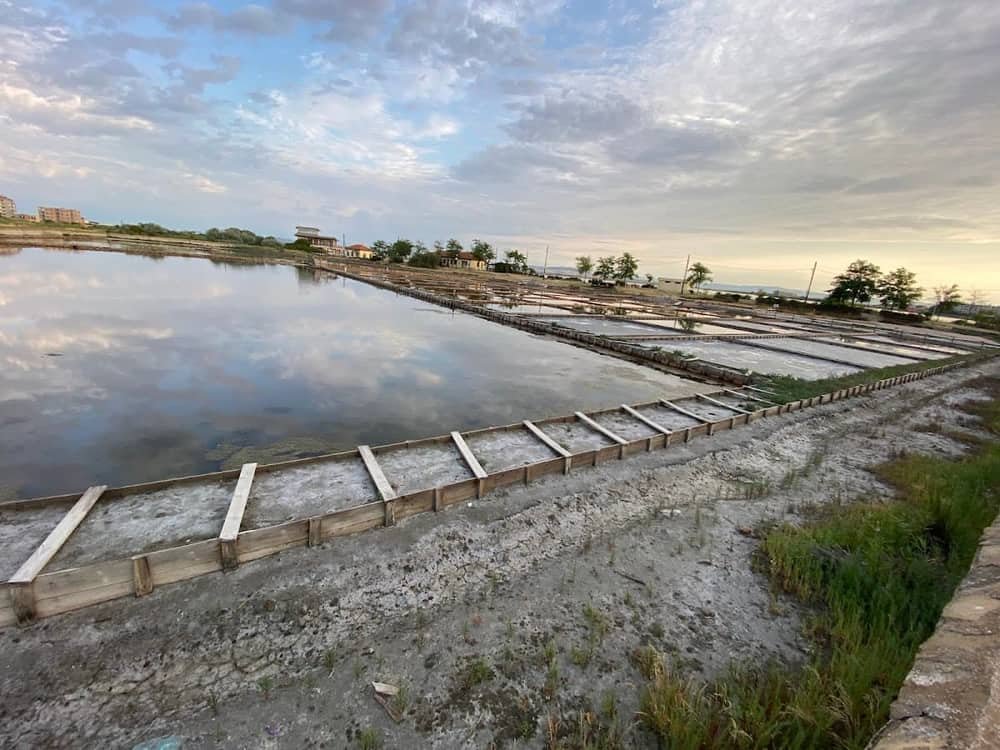
On the coast, near Burgas and close to Sunny Beach and Nessebar, Pomorie offers something altogether different from the mountain springs: mud and lye therapy, tied to the town's salt lake and its salt pans.
The black mud of Lake Pomorie, rich in minerals, is applied as wraps or baths and is traditionally used for rheumatic, joint and skin conditions. Lye — the concentrated solution left from evaporating the salt water — completes the treatment. Pomorie has a dedicated balneological centre for these procedures, and the mix of sea, sun and mud makes it a coastal wellness destination rather than just a beach.
Pomorie is also a town with character: an old fishing and salt-producing centre, with a salt museum where you can see the harvest still done by hand using ancient methods. It is a place where wellness and local gastronomy — fresh fish, Pomorie wine — go hand in hand.
What kind of wellness to expect
The offer varies widely, from classic sanatoriums to design-led spas. In general you will find:
- Thermal pools, indoor and outdoor, many open year-round.
- Individual mineral baths, hydrotherapy, jacuzzis, Vichy showers.
- Saunas and hammams — Finnish sauna, steam room, sometimes Turkish baths fitted out in Ottoman style.
- Mud and lye wraps, especially on the coast.
- Inhalations and aerosols with mineral water, for the airways.
- Massage and physiotherapy, often under medical supervision in resorts with a treatment base.
A practical tip: if you are after a genuinely therapeutic treatment (not just relaxation), it is worth booking a hotel with its own balneological centre and asking about an initial consultation. For pure relaxation, any four-star hotel with a thermal spa will do.
When to go
Spa in Bulgaria is a year-round pleasure, but each season has its own charm.
- Winter is, paradoxically, peak season for the mountain thermal resorts. The feeling of sitting in a steaming outdoor pool with snow all around is hard to match. Velingrad and Devin are magical then, and prices are often gentler than at ski resorts such as Bansko or Borovets.
- Spring and autumn are ideal for combining spa with hiking and cultural visits, without the summer heat.
- Summer shifts the focus to the coast: Pomorie comes into its own, because you can alternate the beach with mud treatments.
How to pair spa with sightseeing
The great advantage of Bulgaria's thermal resorts is that none of them is isolated. A few natural routes:
- Velingrad / Devin + Rodopi: spa, plus hiking, the narrow-gauge railway and the mountain villages. Within reasonable reach lie Pamporovo and Bachkovo monastery.
- Hisarya + Plovdiv: light waters and culture — Plovdiv's old town, with its painted houses, is a full day of wandering.
- Sandanski + Melnik: thermal water, wine and the sand pyramids, in the country's mildest climate.
- Pomorie + the coast: mud and sea, with Nessebar, Sozopol and Sveti Vlas within easy reach for a day of exploring.
Whatever the route, thermal Bulgaria offers that rare thing in a modern holiday: slowed-down time, warm water, and the feeling of coming home healthier than you left. And for a traveller from Romania, all of it is just a few hours by car, across a border you can barely feel any more.
FAQ
Which are Bulgaria's best-known thermal resorts? Velingrad, sitting on more than eighty mineral springs, calls itself the spa capital of the Balkans. Hisarya preserves Roman baths and light drinking waters, Devin hides in the wild Rodopi, Sandanski trades on its mild climate, and coastal Pomorie offers black-mud therapy.
What makes Bulgaria's waters different? The complex geology of the Rodopi range and the Struma valley yields unusual variety: hot waters over 70 °C at source, lightly mineralised drinking waters, and bicarbonate or sulphur springs. Balneology here is a serious medical tradition, with treatment centres and medical staff, not just a marketing line.
How does Pomorie differ from the mountain resorts? Pomorie offers black-mud and lye therapy tied to its salt lake, traditionally used for rheumatic, joint and skin conditions. It is a coastal wellness destination where you can alternate the beach with treatments, ideal in summer.
When is the best time to go for a thermal spa? Winter is, paradoxically, peak season for the mountain resorts such as Velingrad and Devin — a steaming outdoor pool ringed by snow is hard to match, and often cheaper than Bansko. Summer shifts the focus to Pomorie, while spring and autumn are ideal for pairing spa with hiking. See also our other guides.